Blog
Ultimate Professional Groomer Clothing Guide: Best Pet Grooming Workwear, Salon Uniforms, Shoes & Mobile Grooming Gear

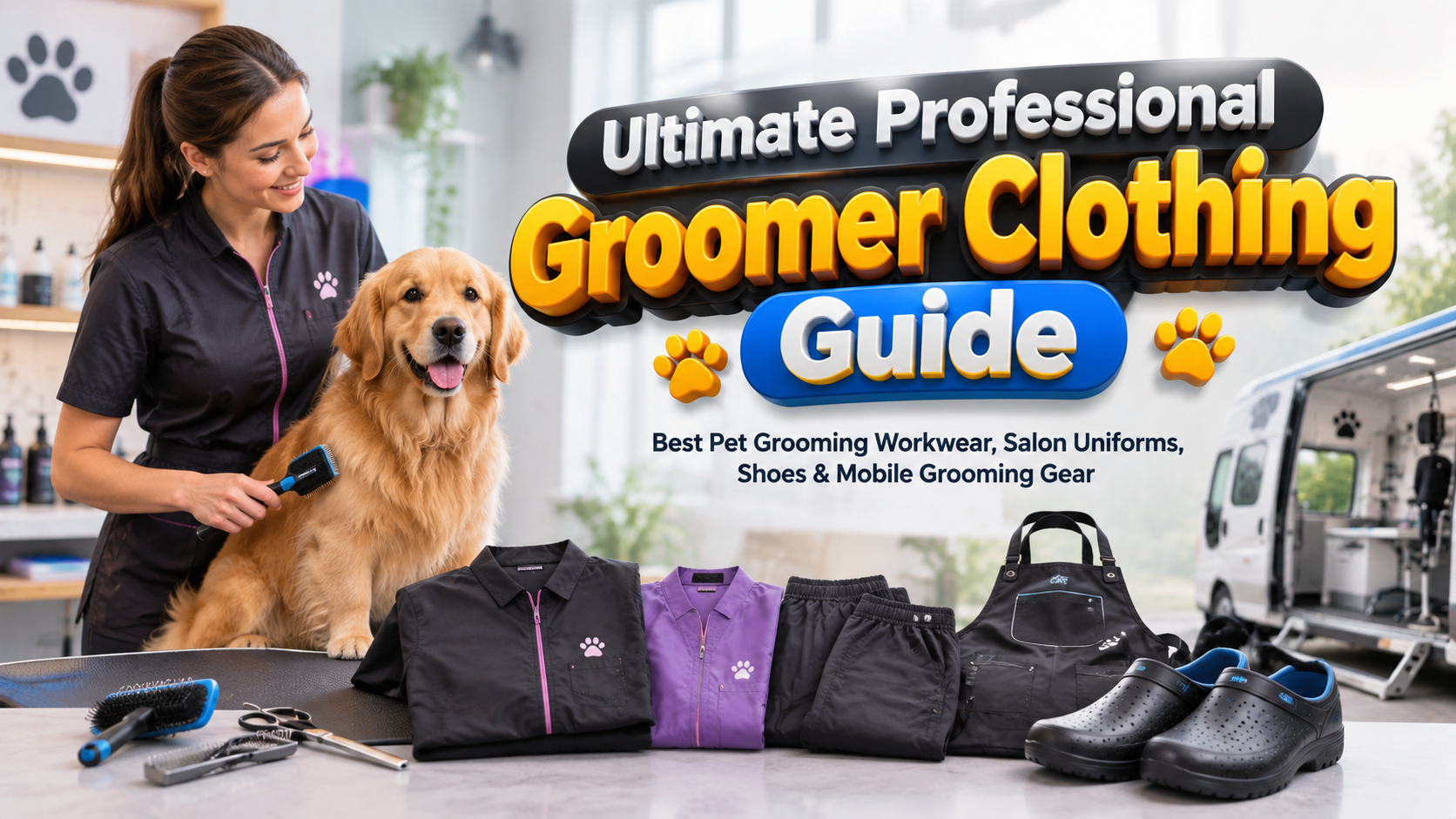
Professional dog grooming involves much more than bathing, brushing, trimming, and styling pets. Groomers spend long hours standing, bending, reaching, lifting, and working around water, loose pet hair, shampoos, conditioners, dryers, and grooming equipment. Because of these conditions, the clothing worn during the workday can have a direct effect on comfort, mobility, hygiene, and daily efficiency.
The right professional groomer clothing is designed around these working conditions. Grooming smocks, jackets, pants, aprons, footwear, and other workwear can provide different forms of protection and comfort depending on the task and environment.
For salon groomers, clothing may also contribute to a consistent team appearance. Mobile groomers often need workwear that can adapt to changing temperatures, outdoor conditions, and limited working spaces.
This guide explains the main types of professional groomer clothing, important fabric features, fit considerations, salon uniforms, mobile grooming workwear, footwear, seasonal clothing, maintenance, and common mistakes to avoid.
What Is Professional Groomer Clothing?
Professional groomer clothing refers to specialized workwear designed for people who regularly perform pet grooming tasks.
Unlike ordinary everyday clothing, grooming workwear needs to function in an environment where water, pet hair, grooming products, repetitive movement, and frequent washing are common.
Common examples include:
- Grooming smocks
- Grooming jackets
- Grooming pants
- Grooming aprons
- Professional grooming shoes
- Salon uniforms
- Protective outer layers
- Seasonal workwear
The exact combination depends on the groomer’s work environment, climate, daily workload, and personal preferences.
A groomer working inside a busy salon may prioritize lightweight, hair-resistant clothing, while a mobile groomer may place greater importance on weather resistance and layering.
Why Professional Grooming Workwear Matters
Grooming clothing serves several practical purposes during a normal working day.
Protection From Water and Moisture
Bathing and drying are common parts of professional grooming. Water-resistant or water-repellent garments can help reduce the amount of moisture that reaches the clothing underneath.
This can be particularly useful during bathing, rinsing, and drying.
Managing Pet Hair
Loose hair is one of the most noticeable challenges in grooming environments. Smooth or hair-resistant fabrics can make loose hair easier to remove compared with textured fabrics that allow hair to become trapped.
Supporting Comfortable Movement
Groomers frequently bend, stretch, reach, lift, and move around grooming tables. Clothing that allows unrestricted movement can make these activities more comfortable.
Maintaining a Professional Appearance
Clean and consistent workwear can contribute to a professional salon environment. For teams, coordinated uniforms can also create a consistent visual appearance.
Handling Frequent Washing
Professional grooming clothing may need to be washed frequently. Durable fabrics and construction are therefore important considerations when selecting workwear for regular use.
Essential Types of Professional Groomer Clothing
There is no single garment that meets every grooming requirement. A practical workwear system usually combines several clothing types.
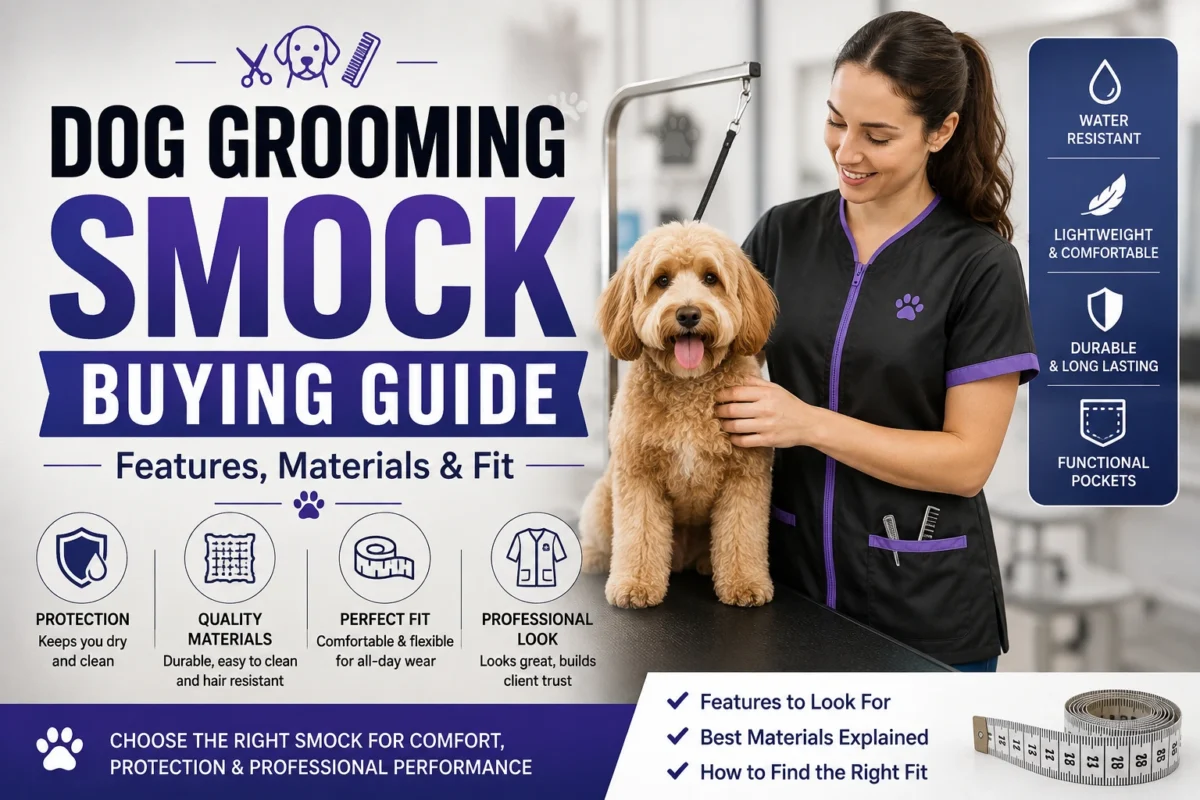
Grooming Smocks
Grooming smocks are among the most recognizable forms of professional grooming apparel.
They are commonly worn as an outer layer to help protect the groomer’s clothing from loose hair, water, and grooming products.
Important characteristics may include:
- Lightweight construction
- Smooth fabric surfaces
- Water resistance
- Hair-resistant properties
- Breathability
- Easy cleaning
- Comfortable sleeve design
- Secure closures
The ideal smock depends on the type of grooming being performed and the working environment.
Grooming Jackets
Grooming jackets provide another outer-layer option for professionals who want additional coverage.
A grooming jacket can be useful in cooler environments or for groomers who prefer more structured protection around the upper body.
When selecting a jacket, consider:
- Fabric weight
- Flexibility
- Sleeve construction
- Closure type
- Water resistance
- Hair release
- Ease of washing
A jacket should provide coverage without creating unnecessary restriction during grooming movements.
Grooming Pants
Grooming pants are designed to support movement while helping manage hair, moisture, and everyday wear.
Important features can include:
- Flexible fabric
- Comfortable waistband
- Smooth outer surface
- Quick-drying characteristics
- Durable stitching
- Practical pocket placement
- Comfortable fit
Because groomers spend much of the day moving between different positions, restrictive pants can become uncomfortable over long shifts.
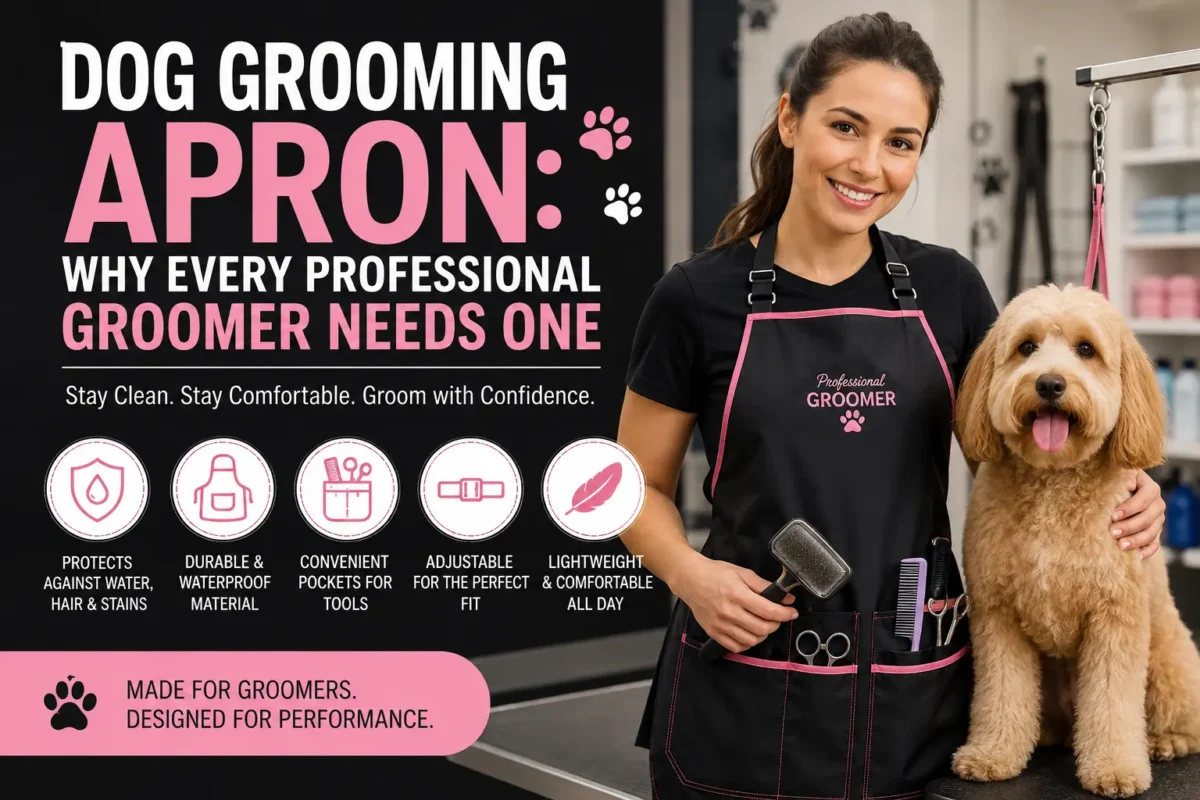
Grooming Aprons
Aprons can provide an additional protective layer during tasks involving significant water exposure.
They are particularly useful during bathing and other high-moisture activities.
Useful apron features may include:
- Adjustable straps
- Water-resistant material
- Easy-clean surface
- Secure construction
- Practical storage pockets
- Comfortable coverage
An apron can also be removed quickly when the groomer moves from bathing to another stage of the grooming process.
Grooming Shoes
Footwear is an important part of grooming workwear because salon floors can become wet or slippery.
Professional grooming footwear should be selected with attention to:
- Non-slip performance
- Water resistance
- Comfort
- Support
- Closed-toe protection
- Ease of cleaning
- Long-duration wear
Groomers may spend many hours standing, so footwear comfort can be just as important as the protective features.
Key Features to Look for in Grooming Workwear
Different grooming environments require different combinations of features. However, several characteristics are commonly useful.
Hair-Resistant Fabric
Hair-resistant surfaces can make loose pet hair easier to remove.
This is particularly useful for groomers who work with shedding breeds or handle many pets during a single shift.
Water Resistance
Water-resistant materials can help reduce moisture absorption during bathing and drying.
Water resistance is especially relevant for smocks, jackets, and aprons.
Breathability
A garment that protects against moisture should still allow comfortable airflow.
Grooming salons can become warm because of dryers, bathing areas, equipment, and continuous activity.
Lightweight Construction
Heavy workwear may become uncomfortable during long shifts.
Lightweight garments can provide coverage while allowing easier movement.
Flexibility
Stretch or flexible construction can help accommodate bending, reaching, lifting, and other grooming movements.
Durability
Professional clothing is exposed to repeated washing and daily mechanical stress. Durable construction can help garments maintain their usefulness over time.
Easy Cleaning
Workwear should be practical to wash and maintain. Groomers may need to clean clothing regularly because of hair, moisture, grooming products, and general salon exposure.
Choosing the Right Fabric for Grooming Clothing
Fabric selection can have a major influence on comfort and performance.
Common fabric considerations include:
| Fabric Feature | Why It Matters |
|---|---|
| Water resistance | Helps reduce moisture absorption |
| Smooth surface | Makes loose hair easier to remove |
| Breathability | Supports comfort during long shifts |
| Flexibility | Allows greater freedom of movement |
| Quick drying | Helps garments dry faster |
| Durability | Supports frequent use and washing |
| Lightweight construction | Reduces unnecessary garment weight |
Polyester blends, nylon-based fabrics, stretch materials, and other technical textiles may be used in grooming workwear depending on the garment’s intended purpose.
There is no single fabric that is ideal for every groomer. Climate, grooming tasks, washing requirements, and personal comfort should all be considered.
How to Choose the Right Fit
Fit is an important part of functional grooming clothing.
A garment that is too tight can restrict movement, while clothing that is excessively loose may interfere with equipment or become uncomfortable during work.
When checking the fit, consider whether you can comfortably:
- Bend down
- Reach across a grooming table
- Lift equipment
- Move your arms freely
- Walk comfortably
- Sit or crouch when necessary
Sleeve length, garment length, waistband comfort, and shoulder mobility should also be considered.
For salon teams, consistent sizing can simplify uniform selection, but each employee should still receive a size that allows comfortable movement.
Professional Salon Uniforms
Salon uniforms are not only about matching colors. They can combine functionality with a consistent workplace appearance.
A grooming salon may coordinate:
- Smocks
- Jackets
- Pants
- Aprons
- Shoes
- Colors
- Logo placement
A consistent clothing system can make staff easier for clients to identify and can contribute to an organized salon environment.
However, appearance should not replace functionality. A salon uniform still needs to be comfortable enough for the physical demands of grooming.
Mobile Grooming Workwear
Mobile grooming creates a different set of clothing requirements.
Instead of working in a relatively controlled salon environment, mobile groomers may work inside grooming vans, near outdoor areas, or in changing weather conditions.
Important considerations can include:
- Lightweight layers
- Water-resistant outerwear
- Breathable inner garments
- Flexible construction
- Weather adaptability
- Easy-to-clean materials
- Compact clothing options
Layering can be particularly useful because the temperature inside a mobile grooming environment may change throughout the day.
Salon vs. Mobile Grooming Clothing
Although both types of groomers require functional clothing, their priorities can differ.
| Consideration | Salon Grooming | Mobile Grooming |
|---|---|---|
| Environment | Mostly controlled indoor setting | Variable working conditions |
| Main clothing focus | Comfort and consistency | Adaptability and weather protection |
| Uniform needs | Often important for teams | Depends on business model |
| Layering | Sometimes needed | Often more useful |
| Weather resistance | Useful | Particularly important |
| Mobility | Important | Essential |
| Cleaning | Frequent | Frequent |
Neither environment requires exactly the same clothing system. Workwear should reflect the actual conditions in which the groomer operates.
Seasonal Grooming Workwear
Clothing requirements can change throughout the year.
Summer Grooming Clothing
Warm conditions can make grooming work uncomfortable, particularly in salons with dryers and high activity levels.
Summer workwear may benefit from:
- Lightweight fabrics
- Breathable construction
- Moisture management
- Short or ventilated sleeves
- Comfortable loose-but-secure fit
The goal is to reduce unnecessary heat while maintaining adequate protection.
Winter Grooming Clothing
Cold environments require a different approach.
Layering can help groomers adjust their clothing throughout the day.
Useful winter considerations include:
- Thermal base layers
- Flexible outer garments
- Water-resistant outer layers
- Comfortable footwear
- Adjustable layering
Mobile groomers may need to pay particular attention to changing outdoor temperatures.
Grooming Shoes and Foot Safety
Footwear deserves special attention because grooming environments can involve water and wet floors.
A suitable pair of grooming shoes should provide a combination of:
- Stable footing
- Non-slip performance
- Comfortable support
- Water resistance
- Easy cleaning
- Appropriate coverage
Closed-toe footwear can also provide protection from accidental contact with grooming tools, equipment, or pets.
Because grooming often involves prolonged standing, poor footwear can contribute to discomfort and fatigue.
Grooming Clothing and Workplace Safety
Workwear can support safety when it is appropriately designed and properly fitted.
Important considerations include:
- Secure closures
- Appropriate garment length
- Non-restrictive movement
- Non-slip footwear
- Durable seams
- Suitable protection from water
- Clothing that does not interfere with equipment
Loose clothing, unsecured accessories, or unsuitable footwear may create unnecessary risks around grooming equipment.
Safety should always be considered alongside comfort and appearance.
How Many Grooming Outfits Does a Professional Groomer Need?
The number of outfits required depends on workload, washing frequency, climate, and how often clothing becomes wet or covered in hair.
A groomer who handles many dogs each day may benefit from having several sets available for rotation.
A practical wardrobe might include:
- Multiple grooming smocks or jackets
- Several pairs of grooming pants
- One or more protective aprons
- Appropriate footwear
- Seasonal layers
Having replacement garments available can be useful when clothing becomes wet or heavily covered with hair during the working day.
How to Maintain Grooming Workwear
Proper maintenance helps preserve both appearance and fabric performance.
Washing
Always follow the garment manufacturer’s washing instructions.
General considerations may include:
- Use the recommended detergent
- Avoid unnecessarily harsh washing conditions
- Check care labels before using heat
- Separate heavily contaminated workwear when appropriate
- Avoid products that may affect specialized fabric finishes
Drying
Drying requirements depend on the fabric.
Some technical garments may benefit from air drying, while others may be suitable for machine drying under specific settings.
The garment’s care instructions should take priority.
Regular Inspection
Check clothing regularly for:
- Loose stitching
- Damaged closures
- Worn seams
- Fabric damage
- Broken pockets
- Changes in water resistance
Early identification of damage can help prevent a small problem from becoming a larger one.
Common Mistakes When Choosing Groomer Clothing
Choosing grooming clothing based only on appearance can lead to practical problems.
Choosing Regular Clothing
Everyday clothing may not be designed for repeated exposure to water, pet hair, grooming products, and frequent washing.
Ignoring Fit
A garment can look good but still restrict movement if the fit is incorrect.
Choosing Heavy Materials
Heavy fabrics may become uncomfortable during long grooming sessions, especially in warm environments.
Overlooking Footwear
Groomers sometimes focus heavily on upper-body clothing while giving insufficient attention to footwear.
Buying Without Considering the Work Environment
Salon and mobile grooming conditions can be very different. Clothing should match the actual working environment.
Ignoring Maintenance Requirements
A garment that requires complicated care may not be practical for a busy grooming professional.
How the Right Workwear Supports Daily Grooming
The purpose of grooming workwear is not simply to create a professional appearance.
Well-selected clothing can support daily activities by helping groomers manage:
- Water exposure
- Loose pet hair
- Heat
- Repetitive movement
- Long working hours
- Frequent washing
- Changing environmental conditions
The most suitable clothing system is therefore one that matches the groomer’s actual routine.
Professional Groomer Clothing Checklist
Before choosing grooming workwear, consider the following checklist:
Clothing
- Is the garment comfortable during movement?
- Is the material suitable for the grooming environment?
- Is it easy to clean?
- Can it handle frequent washing?
Protection
- Does it provide appropriate water resistance?
- Does the surface release pet hair easily?
- Does it provide enough coverage?
Fit
- Can you bend and stretch comfortably?
- Are the sleeves appropriate?
- Is the garment secure without being restrictive?
Footwear
- Does it provide stable footing?
- Is it comfortable for long periods?
- Can it handle wet working conditions?
Environment
- Do you work in a salon or mobile setting?
- Do seasonal temperatures affect your work?
- Do you need additional layers?
Considering these questions before purchasing workwear can make it easier to select clothing that fits the demands of professional grooming.
Frequently Asked Questions About Professional Groomer Clothing
1. What clothing should a professional dog groomer wear?
Professional groomers commonly wear specialized smocks, jackets, pants, aprons, and suitable footwear designed for grooming environments.
2. What fabric is best for grooming clothing?
The appropriate fabric depends on the working environment, but water resistance, breathability, flexibility, durability, and easy cleaning are useful characteristics.
3. Are grooming smocks useful?
Yes. Grooming smocks can provide an outer protective layer against loose hair, moisture, and grooming products.
4. What should mobile groomers wear?
Mobile groomers may benefit from lightweight, flexible, weather-resistant clothing and layering systems that can adapt to changing conditions.
5. Are grooming pants different from regular pants?
Grooming pants may use fabrics and construction intended to provide flexibility, easier hair removal, quick drying, and durability for professional use.
6. Why are non-slip shoes important for groomers?
Grooming areas can become wet, so stable, non-slip footwear can help reduce the risk of slipping.
7. How many grooming outfits should a groomer have?
The appropriate number depends on workload and washing frequency. Multiple sets allow clothing to be rotated when garments become wet or heavily soiled.
8. How should grooming clothing be washed?
Follow the manufacturer’s care instructions. Technical fabrics may require specific washing and drying conditions to maintain their properties.
9. Should grooming clothing be lightweight?
Lightweight clothing can improve comfort during long shifts, particularly in warm salons or mobile grooming environments.
10. What should salons consider when choosing uniforms?
Salons should consider comfort, fit, durability, cleaning requirements, functionality, and consistency across the team.
Final Thoughts
Professional groomer clothing is an important part of the daily grooming environment. The right workwear can help professionals manage water, pet hair, movement, heat, frequent washing, and long working hours more comfortably.
A complete grooming wardrobe may include smocks, jackets, pants, aprons, suitable footwear, and seasonal layers. The best combination depends on the groomer’s responsibilities, work environment, climate, and personal requirements.
Salon groomers may place greater emphasis on coordinated uniforms and comfortable indoor workwear, while mobile groomers may need more adaptable clothing for changing conditions.
Rather than choosing grooming clothing based on appearance alone, consider fabric performance, fit, mobility, water resistance, hair management, durability, safety, and maintenance. A practical workwear system should support the way professional grooming is actually performed every day.