Blog
Dog Grooming Salon Checklist for a Safe and Efficient Workflow

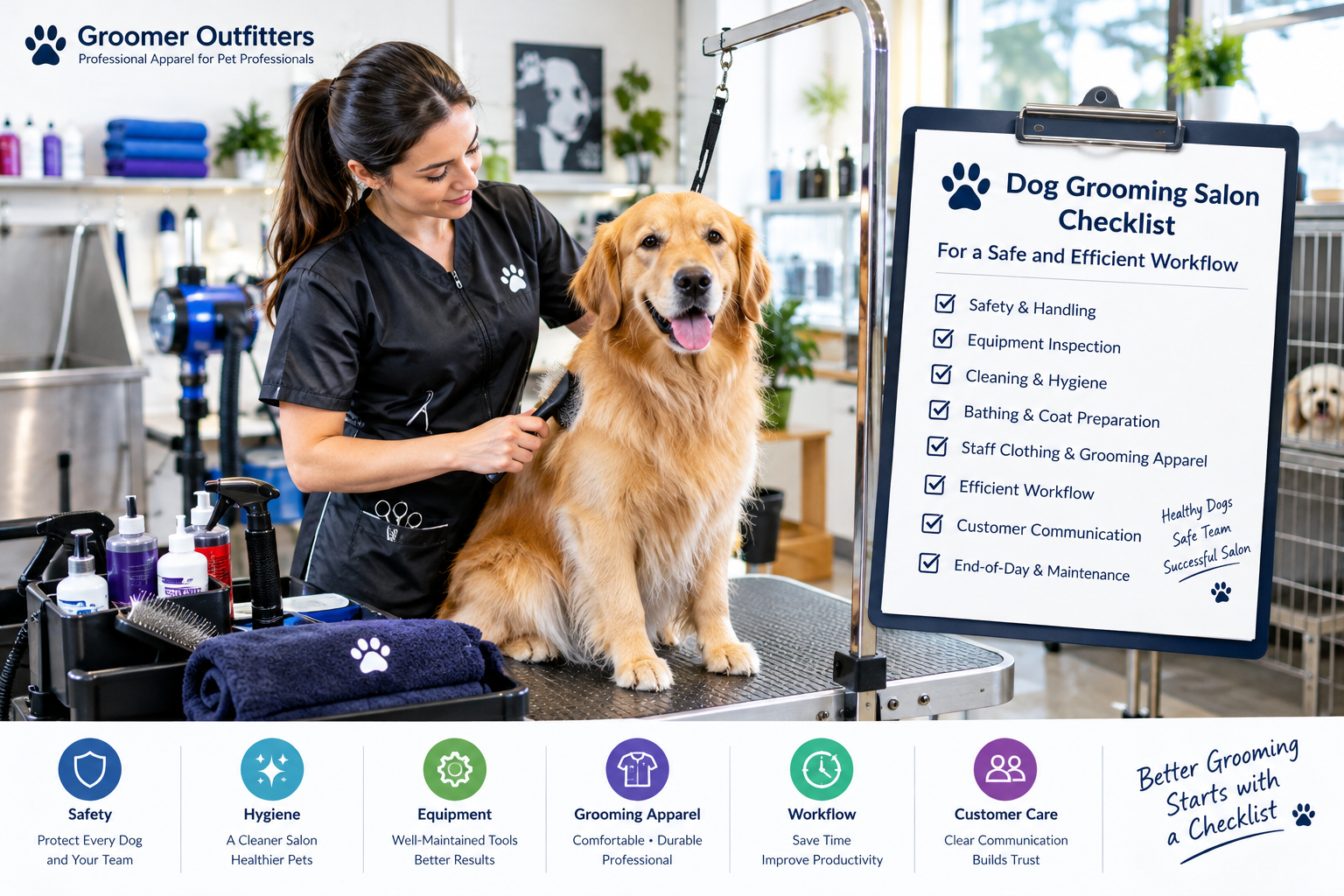
Running a professional dog grooming salon requires more than grooming skills and the right equipment. A well-organized salon needs consistent hygiene practices, safe dog handling procedures, properly maintained tools, prepared workstations, suitable staff clothing, and an efficient daily workflow. Without a reliable checklist, small problems can lead to delays, missed cleaning tasks, uncomfortable working conditions, or avoidable safety risks.
A dog grooming salon checklist helps professional groomers and salon owners organize daily responsibilities, maintain a cleaner working environment, improve staff coordination, and create a more consistent experience for every dog and customer.
Whether you operate a busy grooming salon, manage a pet grooming business, or provide mobile grooming services, a structured checklist can help you prepare for appointments, monitor equipment, maintain sanitation, and finish each working day more efficiently.
This guide explains how to build a practical dog grooming salon checklist, which safety procedures deserve priority, how to organize your grooming workflow, and how to select appropriate grooming workwear for professional use.
What Is a Dog Grooming Salon Checklist?
A dog grooming salon checklist is a structured list of tasks that groomers and salon staff complete before, during, and after grooming appointments. It covers essential responsibilities such as equipment inspection, workstation preparation, dog assessment, cleaning, grooming procedures, and end-of-day maintenance.
Instead of relying on memory, staff can follow the same process for every appointment and working day.
A comprehensive checklist typically includes:
- Opening and closing procedures.
- Grooming table and equipment inspections.
- Cleaning and disinfection tasks.
- Dog health and behavior observations.
- Bathing, drying, brushing, and coat preparation.
- Personal protective equipment and grooming clothing.
- Customer communication and appointment records.
- Waste disposal and laundry management.
The exact checklist should reflect the salon’s size, equipment, services, local regulations, and the needs of the dogs being groomed.
For salon owners, a written checklist also makes it easier to train new employees, identify recurring problems, and maintain consistent operating standards.
1. Opening Checklist for a Dog Grooming Salon
The opening routine establishes the conditions for the entire working day. Completing essential checks before the first appointment can reduce interruptions and help staff identify potential hazards before dogs enter the grooming area.
Inspect the Salon Environment
Walk through the salon before beginning appointments. Check that floors, walkways, and work areas are clean, dry where appropriate, and free from unnecessary obstacles.
Pay attention to:
- Wet or slippery flooring.
- Loose electrical cables.
- Damaged equipment or furniture.
- Blocked exits and walkways.
- Poor ventilation or unusual odors.
- Cleaning products left within reach of animals.
- Unsafe storage of scissors, blades, and other sharp tools.
Remove hazards before grooming begins. If a piece of equipment appears unsafe, take it out of service until it has been inspected or repaired.
Prepare Grooming Stations
Each workstation should have the equipment needed for the scheduled services. Organizing supplies in advance reduces the need to leave a dog unattended or interrupt a grooming procedure to search for a tool.
Prepare the following items as needed:
- Grooming table with a secure, suitable restraint system.
- Brushes and combs appropriate for the coat type.
- Clean clippers and suitable blades.
- Grooming scissors and nail-care tools.
- Towels and clean bathing supplies.
- Appropriate shampoos and conditioners.
- Drying equipment with functioning controls.
- Waste containers and cleaning materials.
Check that the grooming table is stable and that adjustable mechanisms work correctly. Inspect restraint equipment for wear and damage before use.
Important: Never leave a dog unattended on a grooming table, even if a restraint is being used.
Check Appointments and Customer Instructions
Review the day’s booking schedule before accepting the first dog.
Confirm the expected arrival times, requested services, estimated appointment durations, and any special handling instructions already provided by customers.
Useful details include:
- Breed, age, and coat condition.
- Requested haircut or styling preferences.
- Previous grooming experiences.
- Known sensitivities or behavioral concerns.
- Relevant medical or mobility information shared by the owner.
- Contact details for reaching the owner if a concern arises.
Do not assume that every dog can safely receive the same services. Groomers should assess each dog individually and discuss concerns with the owner before proceeding.
2. Dog Safety and Handling Checklist
Dog safety should be a priority throughout the appointment, not simply a task completed at check-in. Even experienced groomers can encounter unexpected reactions when a dog is frightened, uncomfortable, or unfamiliar with the environment.
Complete a Pre-Grooming Assessment
Before starting, observe the dog’s general condition and behavior. Ask the owner about relevant concerns and inspect the coat and skin as appropriate.
Look for signs such as:
- Unusual fear or distress.
- Excessive panting unrelated to normal activity.
- Limping or difficulty standing.
- Visible skin irritation or wounds.
- Severe matting close to the skin.
- Sensitivity around the ears, paws, or other body areas.
- Signs of pain or unusual behavior.
A groomer should not attempt to diagnose a medical condition. If a dog appears unwell or has a potentially serious injury, pause the service and recommend appropriate veterinary assessment.
Discuss severe matting, sensitive areas, and realistic grooming outcomes with the owner before beginning.
Use Appropriate Restraint and Handling Techniques
Restraint should help maintain safety without causing unnecessary discomfort or restricting breathing.
Use equipment suited to the dog’s size, physical condition, temperament, and grooming procedure. Check restraint attachments regularly and never use them to force a frightened or struggling dog to continue.
Good handling practices include:
- Allowing the dog time to become familiar with the environment.
- Using calm, consistent movements.
- Avoiding unnecessary noise and sudden movements.
- Providing breaks when appropriate.
- Monitoring the dog’s behavior throughout the appointment.
- Stopping when distress or a safety concern develops.
If a dog shows escalating fear, aggression, or signs of physical distress, pause the procedure and reassess the handling plan. Refer to a veterinarian or qualified behavior professional when necessary.
Monitor Dogs During Bathing and Drying
Bathing and drying require particular attention because water, heat, noise, and unfamiliar equipment can create stress.
Use water at a comfortable temperature and prevent water from entering the dog’s ears, nose, or eyes. Select bathing products suitable for the animal and follow product instructions.
During drying:
- Maintain appropriate airflow and temperature.
- Keep equipment at a safe distance.
- Avoid directing hot air continuously at one area.
- Monitor breathing, comfort, and behavior.
- Never leave a dog unattended in a drying enclosure.
- Stop immediately if the dog shows concerning signs of overheating or distress.
Individual dogs may have different tolerances for noise, handling, and temperature. Adjust the process to the dog rather than following a fixed routine regardless of its condition.
3. Grooming Equipment Inspection Checklist
Grooming tools need regular inspection, cleaning, and maintenance. Damaged equipment can affect grooming quality and create avoidable risks for both dogs and staff.
Clippers, Blades, and Scissors
Before each appointment, inspect clippers and blades for damage, excessive heat, unusual vibration, or abnormal noise.
Check that scissors open and close smoothly and that their tips and blades are in good condition.
Follow the manufacturer’s instructions for cleaning, lubrication, and blade maintenance. Clippers and blades should be checked during use because they can become hot enough to cause discomfort or injury.
Replace damaged tools rather than continuing to use them.
Brushes, Combs, and Nail Tools
Inspect brushes and combs for broken teeth, sharp edges, trapped hair, or damaged handles. Check nail clippers and grinders for wear and correct operation.
Clean tools between dogs and disinfect them using an appropriate product and contact time. Disinfection is not a substitute for removing visible hair, dirt, and organic material first.
Tools contaminated with blood or other potentially infectious material require an appropriate cleaning and disinfection procedure.
Grooming Tables, Tubs, and Dryers
Inspect the structural components of tables and tubs, including non-slip surfaces, supports, drainage, and restraints.
Check dryers for damaged cords, blocked air intakes, and malfunctioning controls. Follow electrical safety instructions, especially in areas where water is present.
A simple equipment log can record:
- Date of inspection.
- Equipment condition.
- Cleaning or maintenance completed.
- Problems identified.
- Repairs or replacement required.
- Staff member responsible.
Regular inspection helps salon owners identify problems before they disrupt appointments.
4. Salon Cleaning and Hygiene Checklist
A clean grooming salon supports a healthier environment for dogs, employees, and customers. However, sweeping away hair alone is not enough. Effective hygiene requires a consistent process for removing debris, cleaning surfaces, and disinfecting suitable equipment.
Clean Between Every Appointment
After each dog, remove loose hair and visible debris from the grooming table, surrounding floor, and other contaminated surfaces.
Clean and disinfect the workstation using products appropriate for the surface and intended purpose. Follow label directions for dilution, application, and contact time.
The between-appointment checklist should include:
- Removing loose hair from the table and floor.
- Cleaning contaminated surfaces.
- Disinfecting appropriate high-touch areas.
- Replacing used towels with clean ones.
- Cleaning grooming tools.
- Removing waste.
- Preparing fresh supplies for the next dog.
Do not mix cleaning chemicals. Store all products in their original or correctly labeled containers and away from animals.
Maintain Separate Clean and Used Supplies
Used towels, grooming capes, and other reusable textiles should be kept separate from clean supplies.
Wash reusable items using a suitable laundering process and dry them thoroughly before reuse. Items contaminated with potentially infectious material may require additional precautions.
Store clean towels and grooming supplies in a dry, protected location.
Manage Hair, Waste, and Ventilation
Dog hair can accumulate quickly, particularly in busy salons and during deshedding appointments.
Use an appropriate vacuum or cleaning method to remove hair from floors, corners, equipment, and hard-to-reach areas. Follow manufacturer guidance when cleaning equipment that could be damaged by hair or moisture.
Maintain suitable ventilation and clean air filters according to the equipment instructions.
A regular cleaning schedule should cover daily tasks as well as less frequent jobs such as cleaning storage areas, inspecting ventilation, and maintaining bathing equipment.
5. Dog Grooming Salon Checklist for Bathing and Coat Preparation
Proper coat preparation helps groomers work more efficiently and determine which grooming techniques are suitable for each dog.
Brush and Assess the Coat
Before bathing, assess the coat’s condition and select suitable brushes and combs.
Look for loose undercoat, tangles, matting, debris, and skin concerns. The appropriate brushing technique depends on coat type and the dog’s comfort.
Do not pull aggressively through tangles or attempt to remove severe matting without considering the risks. Tight mats can conceal skin problems and may make removal painful.
Explain the options to the owner and obtain agreement before proceeding with significant changes to the coat.
Select Appropriate Bathing Products
Choose shampoo and conditioner according to the dog’s coat, skin needs, and the manufacturer’s directions.
Avoid assuming that a stronger product or more frequent washing will always produce better results. Incorrect product selection or inadequate rinsing can contribute to irritation.
Prepare the bathing area with towels, appropriate products, and any necessary protective equipment before bringing the dog to the tub.
Organize the Bathing Sequence
A practical bathing routine includes:
- Confirming the planned service and checking the coat.
- Preparing the bathing area and products.
- Wetting the coat appropriately.
- Applying suitable shampoo according to instructions.
- Rinsing thoroughly.
- Applying conditioner if appropriate.
- Completing a final rinse.
- Removing excess water safely.
- Moving to a suitable drying area.
The sequence may need to change depending on coat condition, skin concerns, and the dog’s response.
Good preparation reduces repeated handling and helps the groomer maintain a steady workflow.
6. Dog Grooming Apparel and Staff Clothing Checklist
Professional grooming clothing is an important part of daily salon preparation. Groomers regularly encounter loose hair, water, shampoos, cleaning products, and repetitive physical movements. Clothing should support comfort, mobility, and practical workplace hygiene.
The right dog grooming apparel will depend on the salon’s environment, services, and staff preferences.
Choose Suitable Grooming Workwear
Before beginning a shift, staff should check that their clothing is clean, comfortable, and suitable for the day’s work.
Useful features may include:
- Lightweight construction for long working hours.
- A smooth surface that helps loose pet hair slide off more easily.
- Water-resistant or waterproof materials for wet grooming tasks.
- Comfortable fits that allow bending, reaching, and lifting.
- Secure pockets for carrying suitable small accessories.
- Durable stitching for frequent washing and repeated use.
- Easy-care materials that suit the salon’s laundry routine.
No single garment provides every benefit. Water resistance, breathability, hair release, and durability depend on the fabric, construction, and care requirements.
For example, a groomer who performs frequent bathing may prioritize moisture protection, while someone who spends most of the day brushing and trimming may prioritize mobility and hair-resistant surfaces.
Use Grooming Smocks and Dog Grooming Uniforms
A grooming smock can provide a practical outer layer that helps protect everyday clothing from loose hair, splashes, and routine grooming debris.
Professional dog grooming uniforms can also help create a consistent appearance across the salon team. Matching clothing may make staff easier for customers to identify and support a more organized business image.
When evaluating uniforms, consider:
- Fit across the shoulders and arms.
- Length and coverage during movement.
- Pocket position and usability.
- Fastening design and durability.
- Fabric weight and drying time.
- Ease of cleaning.
- Color consistency across staff garments.
A uniform should never replace task-specific protective equipment. Use suitable gloves, eye protection, or other protective items when the task and product instructions require them.
Waterproof Grooming Apparel for Wet Work
Waterproof grooming apparel may be useful for staff who regularly bathe dogs, handle wet coats, or work in areas with frequent splashing.
However, waterproof and water-resistant fabrics are not necessarily the same. Water resistance may help with light splashes, while waterproof construction is designed to provide a greater barrier to water under specified conditions.
Check how the garment performs in actual working conditions, whether seams and closures offer adequate protection, and whether the fabric becomes uncomfortable during prolonged activity.
For some salons, a combination of lightweight clothing and a waterproof outer layer may be more practical than wearing a heavy garment throughout the day.
Grooming Salon Uniforms for Teams
For multi-groomer businesses, consistent grooming salon uniforms can support a professional appearance and simplify clothing procurement.
Salon owners should establish a practical uniform policy that covers garment care, replacement, and appropriate use.
Consider these questions:
- Will every staff member receive the same garment style?
- Are several sizes available?
- Does the design suit different body shapes?
- Can staff move comfortably during grooming?
- Will the fabric withstand frequent washing?
- Is there a need for embroidered names or salon logos?
- Can replacement garments be ordered consistently?
For salons ordering multiple garments, requesting a sample before committing to a bulk order is a sensible way to assess fit, fabric, stitching, and comfort.
Custom Grooming Apparel for Salon Branding
Custom grooming apparel allows a business to select garment colors, branding, pocket configurations, and other practical details that suit its working environment.
Custom uniforms may be particularly relevant for growing salons, grooming franchises, mobile grooming teams, and businesses developing a recognizable brand.
Before placing a custom order, prepare a clear specification covering sizes, colors, quantities, fabric preferences, logo placement, and required delivery dates.
A sample review can help identify design changes before larger production begins.
For businesses comparing suppliers, a professional grooming apparel manufacturer may be able to discuss custom designs, wholesale production, and private-label requirements.
The priority should be choosing clothing that genuinely supports the team’s daily work rather than selecting a design based on appearance alone.
7. Efficient Grooming Workflow Checklist
An efficient workflow does not mean rushing through appointments. It means organizing tasks so that groomers can maintain quality, monitor animal welfare, and use their working time effectively.
Plan Appointments According to the Dog’s Needs
Appointment duration should reflect the service requested, coat condition, dog size, temperament, and the groomer’s experience.
A short haircut on a cooperative dog may require less time than a deshedding treatment or a dog with extensive matting.
Avoid scheduling every appointment for the same duration simply because the salon uses a standard booking slot.
Allow time for cleaning between dogs, customer communication, and unexpected situations.
Prepare Tools Before Starting
Collect the tools and supplies required for each service before bringing the dog to the workstation.
Organize frequently used items within safe reach while keeping sharp tools and chemicals away from the dog’s movement area.
This reduces unnecessary interruptions and helps the groomer maintain attention on the animal.
Use a Consistent Grooming Sequence
A typical workflow may include:
- Customer check-in and service confirmation.
- Dog assessment and coat evaluation.
- Brushing and coat preparation.
- Bathing and rinsing, when required.
- Drying and coat finishing.
- Haircut, trimming, and styling.
- Nail care and other agreed services.
- Final quality and safety checks.
- Customer update and collection.
- Workstation cleaning and preparation for the next appointment.
Not every dog should follow an identical sequence. Groomers may need to adapt the process to the animal’s condition, tolerance, and service requirements.
Build Cleaning Time Into the Schedule
Cleaning between dogs is a necessary part of the service, not optional downtime.
If appointments are booked too closely together, staff may feel pressured to skip important cleaning steps or rush the next dog.
Salon owners should calculate realistic service times and include preparation, cleaning, and handover tasks in the daily schedule.
A well-planned calendar can improve both staff productivity and the quality of care.
8. Customer Communication and Record-Keeping Checklist
Good customer communication helps avoid misunderstandings and supports better decisions during grooming.
Confirm Services Before Grooming
Discuss the requested haircut, coat length, styling preferences, and any relevant concerns before starting.
If the coat condition makes the requested result unrealistic, explain the options clearly. Obtain the owner’s agreement before making significant changes to the planned service.
Record important instructions rather than relying entirely on memory.
Maintain Useful Appointment Records
A salon may record:
- Date and type of service.
- Coat condition and relevant observations.
- Products or techniques used, where useful.
- Customer preferences.
- Behavioral concerns relevant to safe handling.
- Agreed changes to the requested service.
- Follow-up recommendations.
Records should be accurate, relevant, and stored securely. Share customer information only when appropriate and authorized.
Do not describe routine grooming notes as a medical diagnosis. Refer health concerns to a veterinary professional.
Complete the Handover
At collection, explain what was completed and mention any relevant observations.
For example, you might discuss coat maintenance, brushing frequency, or the timing of the next appointment. If a skin concern or other potential health issue was noticed, describe the observation without diagnosing it and recommend veterinary advice when appropriate.
Clear communication helps establish trust and encourages customers to return.
9. Staff Health, Comfort, and Workplace Safety
Groomers spend many hours standing, bending, reaching, handling equipment, and working around water. A safe workplace should address staff comfort as well as animal welfare.
Reduce Repetitive Strain
Adjustable grooming tables can help staff position dogs at a more comfortable working height.
Where possible:
- Alternate tasks to reduce repetitive strain.
- Use safe lifting techniques.
- Seek assistance when moving larger dogs.
- Keep frequently used equipment within comfortable reach.
- Take suitable breaks during long shifts.
- Report pain, damaged equipment, or unsafe working conditions.
Staff should never attempt to lift an animal beyond their physical capability.
Select Appropriate Footwear and Clothing
Suitable footwear should provide good traction and support for the salon’s floor conditions.
Clothing should allow comfortable movement and avoid loose features that could catch on equipment.
Depending on the task, staff may also need suitable gloves, eye protection, or respiratory protection based on the hazards and product instructions.
For wet grooming environments, garments that help manage splashes and are easy to launder may be useful. However, clothing alone cannot eliminate exposure to cleaning chemicals, allergens, or other workplace hazards.
Prepare for Emergencies
Every salon should have an emergency procedure that staff understand.
The plan should cover how to respond to a dog becoming unwell or injured, who contacts the owner, when veterinary assistance is needed, and how to manage an incident safely.
Keep emergency contact information accessible and maintain a suitable first-aid kit.
Staff should know where exits are located and how to shut down equipment safely if necessary.
10. End-of-Day Dog Grooming Salon Checklist
Closing procedures help ensure that the salon is ready for the next working day.
Clean and Store Equipment
At the end of the shift:
- Remove hair and debris from workstations.
- Clean and disinfect appropriate surfaces.
- Clean grooming tools according to their instructions.
- Empty waste containers.
- Clean bathing and drying areas.
- Check equipment for damage or maintenance needs.
- Store sharp tools and chemicals safely.
- Leave clean towels and supplies ready where practical.
Do not store equipment while it is wet if the manufacturer’s instructions require it to be dried first.
Manage Grooming Laundry
Collect used towels, smocks, aprons, and other reusable workwear separately from clean garments.
Follow appropriate laundering instructions for each fabric and the level of contamination. Ensure items are completely dry before storage.
A reliable laundry routine helps staff begin the next shift with clean clothing and reduces the risk of transferring debris between work areas.
Review the Day and Prepare for Tomorrow
Before leaving, check the appointment schedule for the following day.
Confirm any outstanding customer communications, special service requirements, or equipment issues that need attention.
Record stock shortages and cleaning supplies that need replacement. A brief daily review can prevent small operational problems from becoming recurring disruptions.
11. Weekly and Monthly Salon Maintenance Checklist
Daily cleaning is essential, but some responsibilities require a longer review cycle.
A weekly or monthly checklist helps salon owners monitor the condition of equipment, supplies, workwear, and operational procedures.
Weekly Tasks
- Inspect grooming tables, restraints, and bathing equipment.
- Review tool cleaning and maintenance routines.
- Check stock levels for shampoos and cleaning products.
- Inspect towels, smocks, aprons, and uniforms for wear.
- Clean storage areas and less frequently used surfaces.
- Review appointment timing and workflow bottlenecks.
- Confirm that staff follow current safety procedures.
Monthly Tasks
- Review maintenance and repair records.
- Assess recurring equipment problems.
- Check whether staff training needs updating.
- Review customer feedback and appointment issues.
- Evaluate the condition and fit of staff uniforms.
- Review suppliers and replacement product requirements.
- Update checklists when procedures or equipment change.
These tasks should be adjusted to the salon’s workload and the manufacturer’s recommended maintenance schedule.
12. Printable Dog Grooming Salon Checklist
The following condensed checklist can be printed or adapted into a salon’s daily operating document.
Opening Checklist
- Inspect floors, walkways, and work areas.
- Check grooming tables and restraint equipment.
- Inspect clippers, blades, scissors, and dryers.
- Prepare clean towels and grooming supplies.
- Check the appointment schedule.
- Review relevant customer instructions.
- Ensure cleaning products are stored safely.
- Confirm staff have suitable clothing and protective equipment.
Before Each Dog
- Confirm the requested service with the owner.
- Observe the dog’s condition and behavior.
- Assess the coat and identify concerns.
- Prepare suitable tools and products.
- Check the workstation is clean.
- Confirm that equipment is safe to use.
During Grooming
- Monitor the dog’s comfort and behavior.
- Use appropriate handling and restraint.
- Check clipper blade temperature.
- Monitor drying temperature and airflow.
- Adjust the process when the dog shows distress.
- Pause and seek help if a safety concern develops.
After Each Dog
- Complete the agreed grooming service.
- Perform final quality and safety checks.
- Communicate relevant observations to the owner.
- Remove hair and debris from the workstation.
- Clean and disinfect suitable surfaces.
- Clean and store tools appropriately.
- Replace used towels and prepare for the next appointment.
Closing Checklist
- Clean grooming tables, tubs, and floors.
- Complete tool cleaning and maintenance.
- Remove waste and store chemicals safely.
- Separate used laundry from clean supplies.
- Record damaged equipment and supply shortages.
- Review the next day’s appointments.
- Secure the premises and switch off equipment as appropriate.
13. Common Dog Grooming Salon Checklist Mistakes to Avoid
Even a well-designed checklist can fail if it is too complicated, inconsistently followed, or disconnected from daily operations.
Making the Checklist Too Complicated
A checklist that contains dozens of unnecessary steps may be difficult for staff to follow during busy periods.
Prioritize essential safety and hygiene tasks. Keep detailed maintenance instructions in a separate document when necessary.
Treating Every Dog the Same
Different breeds, coat types, ages, and temperaments require different approaches.
Use the checklist as a consistent framework, not as a replacement for professional judgment or individual assessment.
Ignoring Workwear and Laundry
Grooming tools are not the only items that require attention between appointments.
Workwear can accumulate hair, moisture, and other debris. Establish a clear policy for changing, laundering, and replacing garments when needed.
Skipping Equipment Checks
A tool that worked correctly yesterday may be damaged or overheated today.
Quick inspections before use and appropriate monitoring during grooming can help identify problems early.
Failing to Review the Process
A checklist should evolve as the salon grows, introduces new services, or changes equipment.
Ask staff which tasks are being missed, which procedures cause delays, and which safety improvements would be most useful. Update the checklist based on practical experience.
14. How to Improve Your Salon’s Professional Image
A salon’s professional image is shaped by more than its décor. Clean workstations, organized equipment, clear communication, and consistent staff presentation all contribute to the customer experience.
Professional grooming apparel can support this overall impression while serving practical purposes.
For example, coordinated pet grooming clothing may help customers identify team members, while suitable grooming smocks can help keep everyday clothing cleaner during appointments.
When choosing workwear, prioritize comfort, durability, ease of care, and suitability for the tasks performed.
For growing businesses, custom colors, embroidered logos, and consistent garment designs can help create a recognizable salon identity.
Businesses ordering uniforms for several employees should also consider sizing availability, replacement stock, sample approval, and consistency between production batches.
If you are comparing suppliers, look for a company that understands the specific demands of grooming workwear rather than evaluating garments on appearance alone.
Conclusion
A reliable dog grooming salon checklist helps professional groomers and salon owners manage daily tasks, improve workplace organization, maintain hygiene, inspect equipment, and monitor dog safety.
The most effective approach combines a clear opening routine, individual dog assessments, consistent cleaning procedures, suitable equipment, realistic appointment scheduling, and a thorough closing process.
Staff clothing should also be part of the plan. Appropriate dog grooming apparel, grooming smocks, and professional uniforms can support comfort, manage routine exposure to hair and moisture, and contribute to a consistent business image.
Start with the essential checklist in this guide, adapt it to your salon’s services, and review it regularly with your team. Small, repeatable improvements can make daily grooming operations more organized without compromising the care each dog deserves.
For salons planning to upgrade their workwear, Groomer Outfitters provides a relevant starting point for exploring professional dog grooming apparel, custom grooming clothing, and uniform options suited to grooming businesses. Consider your team’s working conditions, fabric requirements, sizing, and branding needs before selecting garments for a larger order.
Frequently Asked Questions
1. What should be included in a dog grooming salon checklist?
Include opening tasks, equipment inspections, dog assessments, cleaning procedures, grooming steps, staff workwear, customer communication, and closing duties.
2. Why is a grooming salon checklist important?
It helps standardize daily tasks, reduce missed steps, improve organization, and support consistent safety and hygiene practices.
3. How often should grooming equipment be cleaned?
Clean tools between dogs and follow the appropriate cleaning, disinfection, and maintenance instructions for each item.
4. What safety checks should groomers complete before grooming?
Inspect the workstation, restraints, grooming tools, electrical equipment, and the dog’s condition before beginning the service.
5. What clothing is best for professional dog groomers?
Choose comfortable, durable grooming apparel that supports movement and suits the salon’s exposure to pet hair, water, and cleaning tasks.
6. Are waterproof grooming uniforms useful?
They can help manage water exposure during bathing, but garment performance, breathability, and comfort depend on construction and working conditions.
7. What is the difference between a grooming smock and an apron?
A smock generally provides broader upper-body coverage, while an apron primarily protects the areas it covers.
8. How can a grooming salon improve workflow efficiency?
Prepare tools in advance, allow realistic appointment times, standardize routine tasks, and include cleaning time between dogs.
9. Should salons use custom grooming uniforms?
Custom uniforms can support consistent branding, staff identification, and coordinated workwear across a grooming team.
10. Why should salons request a sample before bulk uniform orders?
A sample allows the team to assess fit, fabric, stitching, comfort, color, and practical features before approving larger production.
11. How often should a grooming salon review its checklist?
Review it regularly and update it whenever equipment, services, safety procedures, or staff responsibilities change.
12. What should groomers do if a dog shows distress?
Pause the procedure, assess the situation, and adjust the handling plan. Seek veterinary assistance when the dog’s condition warrants it.