Blog
Why Does Dog Hair Stick to Grooming Clothes? Fabric and Workwear Guide

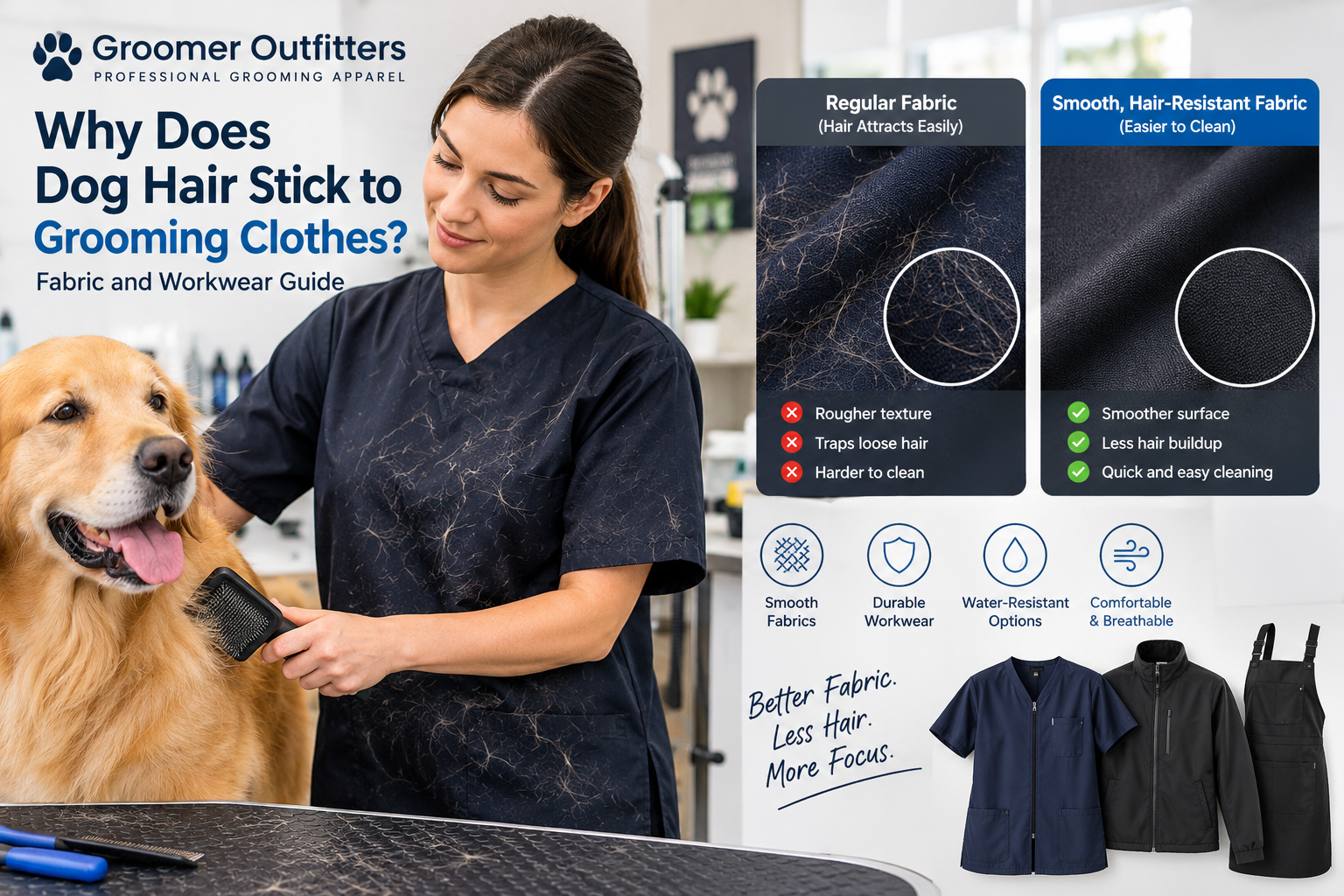
Dog hair sticking to grooming clothes is one of the most common challenges professional dog groomers face. Whether you work in a busy grooming salon, operate a mobile grooming business, or groom dogs independently, loose fur can quickly cover your uniform, affect your comfort, and make it difficult to maintain a clean professional appearance.
However, dog hair does not stick to every fabric in the same way. The type of material, its surface texture, static electricity, the dog’s coat type, and the grooming environment all influence how much hair collects on your clothing.
Understanding these factors can help groomers choose better workwear, reduce hair buildup, and make daily cleaning easier. The right dog grooming apparel can also support a more comfortable workflow during bathing, drying, brushing, clipping, and finishing.
In this guide, we explain why dog hair sticks to grooming clothes, which fabrics tend to attract less hair, how different materials compare, and what professional groomers should consider when choosing grooming uniforms.
Why Does Dog Hair Stick to Grooming Clothes?
Dog hair sticks to grooming clothes because of a combination of fabric texture, static electricity, friction, and the physical characteristics of loose pet hair. Some materials allow hair to slide off relatively easily, while others trap individual strands between their fibers.
During grooming, loose fur becomes airborne as dogs are brushed, clipped, dried, and handled. These strands can settle on clothing and become difficult to remove, particularly when the fabric has a rough surface or generates static.
The problem is not always caused by poor-quality clothing. A fabric that performs well in an ordinary workplace may be less suitable for a professional grooming environment, where hair, water, shampoo, and repeated movement are part of the daily routine.
1. Fabric Texture and Surface Structure
Fabric texture plays an important role in how dog hair collects on clothing. Materials with a rough, fuzzy, or highly textured surface provide more opportunities for loose strands to catch and become tangled.
For example, a soft fleece jacket may feel comfortable in cold weather, but its raised fibers can collect fine undercoat and short clipped hairs. Similarly, loosely woven or brushed materials may hold hair more stubbornly than smooth, tightly constructed fabrics.
Smooth-surfaced grooming workwear generally provides fewer places for hair to become trapped. Although no fabric can guarantee that all dog hair will slide off, selecting a material with a relatively flat surface can make brushing or wiping away loose fur easier.
For professional groomers, this is particularly important when working with double-coated breeds that release substantial amounts of undercoat during brushing and blow-drying.
2. Static Electricity Attracts Loose Dog Hair
Static electricity is another reason dog hair sticks to grooming clothes. When certain materials rub against other surfaces, they can develop an electrical charge that attracts lightweight hair and dust.
This effect can be noticeable when grooming dry coats, removing undercoat, or working in environments with low humidity. Synthetic fabrics such as polyester may generate static under some conditions, although performance varies with fabric construction, finishes, moisture, and the surrounding environment.
Static can cause fine hairs to cling to sleeves, trouser legs, and the front of a grooming smock. Even when the fabric surface is relatively smooth, static attraction may make loose hair harder to remove.
Choosing a low-static fabric construction or a garment with an appropriate anti-static finish may help. Regular cleaning and suitable laundry practices can also reduce residue that affects fabric performance.
3. Loose Hair Becomes Trapped Between Fibers
Not all dog hair behaves in the same way. Long guard hairs, short clipped hairs, and fine undercoat have different shapes and textures.
Long hairs may wrap around textured fibers, while short, stiff hairs can lodge in seams, weave openings, and surface irregularities. Fine undercoat may cling across a wider area, particularly when static is present.
This explains why two grooming garments can behave differently even when they appear to be made from similar materials.
The fabric’s weave, thickness, surface finish, and construction all matter. A tightly constructed fabric with a smooth exterior may release loose hair more readily than a brushed or loosely textured material.
For grooming businesses, evaluating the actual fabric is therefore more useful than choosing workwear based on the fiber name alone.
4. Friction During Grooming Increases Hair Buildup
Professional grooming involves constant movement. Groomers bend, reach, lift equipment, handle dogs, brush coats, and move around grooming tables.
As clothing rubs against a dog’s coat, grooming tools, towels, or other garments, loose hairs can become embedded in the fabric surface. Repeated movement may also increase static under certain conditions.
The areas most likely to collect visible fur often include the chest, stomach, sleeves, thighs, and knees. Groomers who frequently work close to dogs may notice that these areas become covered quickly.
A practical grooming uniform should allow freedom of movement while using a surface that is easy to clean. A good fit also helps reduce unnecessary friction and keeps loose clothing away from grooming equipment.
Which Fabrics Attract Less Dog Hair?
The best fabric for grooming clothes depends on more than its material composition. Surface smoothness, weave density, static behavior, breathability, and water resistance all affect performance.
Some fabrics are better suited to reducing visible hair buildup, while others prioritize softness, warmth, or flexibility.
Polyester and Smooth Synthetic Fabrics
Polyester is widely used in workwear because it can be lightweight, durable, quick-drying, and suitable for a variety of fabric constructions.
Smooth polyester fabrics can work well for grooming smocks, jackets, and uniforms because their relatively flat surfaces may allow loose hairs to be brushed away more easily than from fuzzy materials.
However, polyester is not automatically hair-resistant. Brushed polyester, textured knits, and fabrics that generate static may still collect substantial amounts of pet hair.
For this reason, groomers should assess the finished fabric rather than assuming that every polyester garment will provide the same results.
Nylon and Tightly Woven Fabrics
Nylon is another synthetic fiber used in lightweight workwear and protective garments. Depending on its construction, it can offer good abrasion resistance and a smooth surface.
Tightly woven nylon fabrics may be suitable for grooming jackets, outer layers, and garments exposed to frequent contact with wet coats or grooming equipment.
Some nylon fabrics are treated to improve water resistance, but this feature depends on the specific fabric and finish. Nylon garments can also generate static in certain conditions.
For grooming workwear, a smooth, durable construction is generally more relevant than the fiber name alone.
Cotton and Cotton Blends
Cotton is valued for its softness and comfort, particularly in everyday clothing and garments worn in warm environments. However, conventional cotton fabrics may absorb moisture and have a surface texture that allows hair to cling.
Brushed cotton and fuzzy cotton blends can be especially difficult to clean when fine fur becomes caught in their fibers.
Cotton-polyester blends offer a different balance of comfort, durability, and maintenance. Their performance depends on the proportions of each fiber and how the fabric is woven or knitted.
Cotton can still be useful for certain grooming garments, but buyers should consider how easily the specific fabric releases hair and whether it provides sufficient protection against water and grooming products.
Fleece and Other Brushed Fabrics
Fleece and brushed fabrics are often comfortable, warm, and soft. However, their raised fibers can create more opportunities for dog hair to become trapped.
For this reason, fleece is not always the most practical choice for an outer grooming uniform, especially when working with shedding breeds or fine clipped hair.
A fleece layer may still be useful in a cold environment, but groomers may prefer to keep it underneath a smoother outer garment that is easier to clean.
Water-Resistant and Coated Fabrics
Water-resistant fabrics are commonly considered for grooming workwear because they can help reduce moisture penetration from wet coats, splashes, and bathing activities.
Some coated or laminated fabrics also have smooth surfaces that allow loose hair to be removed relatively easily. However, water resistance does not automatically mean hair resistance.
A coating may improve surface smoothness, but the finished garment still needs to be evaluated for flexibility, breathability, durability, and cleaning requirements.
For professional grooming, the most practical solution is often a fabric that balances a smooth exterior with sufficient comfort and protection for the tasks being performed.
Fabric Comparison: Which Material Is Best for Dog Grooming Clothes?
The following comparison provides a practical starting point when choosing grooming apparel. Actual performance depends on the specific fabric construction and finish.
| Fabric type | Hair-release potential | Main consideration |
|---|---|---|
| Smooth polyester | Often good | Check static behavior and surface finish |
| Tightly woven nylon | Often good | Check breathability and flexibility |
| Cotton | Varies | Comfort and moisture absorption |
| Cotton-polyester blend | Varies | Depends on weave and fiber proportions |
| Fleece | Often less favorable | Raised fibers can trap loose hair |
| Brushed knit fabric | Often less favorable | Textured surfaces collect fine fur |
| Smooth coated fabric | Often good | Check coating durability and comfort |
For most grooming environments, a smooth, tightly constructed fabric is a sensible starting point. The final choice should reflect the amount of shedding, exposure to water, working temperature, and cleaning routine.
What Is Hair-Resistant Grooming Apparel?
Hair-resistant grooming apparel is workwear designed to make pet hair less likely to cling to the garment or easier to remove when it does.
The term does not mean that a uniform is completely immune to dog hair. Instead, it describes a combination of fabric characteristics and garment features intended to reduce the everyday burden of hair buildup.
Professional groomers should look beyond product labels and consider how the clothing performs during real grooming tasks.
Smooth Fabric Surfaces
A smooth outer surface reduces the number of raised fibers and irregularities where loose hair can catch. This can make a grooming smock or jacket easier to brush clean between appointments.
Appropriate Fabric Construction
A tightly constructed fabric may help prevent fine hairs from becoming deeply lodged in the material. However, a fabric that is too heavy or stiff may restrict movement or become uncomfortable during long shifts.
The aim is to balance easy cleaning with flexibility and comfort.
Lightweight Construction
Lightweight grooming apparel can be more comfortable during busy appointments, especially when groomers spend much of the day standing, bending, and working around dogs.
However, lightweight does not necessarily mean hair-resistant. A thin, fuzzy fabric may collect more hair than a slightly heavier material with a smooth finish.
Easy-Care Properties
Grooming uniforms need to withstand frequent cleaning. A practical garment should retain its shape, fit, and surface characteristics under the recommended washing conditions.
Buyers should review the care label and check whether the garment requires special washing or drying procedures.
Functional Garment Design
Fabric is only one part of a grooming uniform. Seams, pockets, cuffs, closures, and garment length can affect how easily hair collects and how comfortable the clothing is to wear.
Well-positioned pockets, secure closures, and a suitable fit can make everyday work more convenient without unnecessarily complicating the garment.
How to Choose Dog Grooming Clothes for Different Working Environments
Not every grooming business has the same requirements. A salon that handles several dogs each day may need a different uniform from a mobile groomer who travels between customers.
Understanding the working environment helps buyers choose clothing that performs well throughout the day.
Grooming Salons
Salon groomers often work with a variety of breeds and coat types. Their uniforms may be exposed to loose fur, shampoo, water, cleaning products, and repeated movement.
Smooth-surfaced grooming smocks and lightweight dog grooming uniforms can help maintain a professional appearance while making routine cleaning easier.
Salons should also consider whether employees need matching colors, embroidered names, or branded garments that create a consistent team appearance.
For businesses ordering uniforms for multiple employees, consistent sizing and reliable fabric quality are particularly important.
Mobile Dog Groomers
Mobile groomers may work in confined spaces with changing temperatures and limited storage. Their clothing needs to support movement while remaining practical to clean and maintain.
Lightweight grooming jackets, smooth-finished smocks, and workwear with suitable water resistance can be useful, depending on the services offered.
Because mobile groomers may move between several appointments in one day, garments that can be brushed clean quickly and washed without complicated care requirements can simplify daily routines.
High-Shedding Breeds
Groomers working frequently with double-coated breeds may experience significant hair buildup during brushing, de-shedding, and drying.
For these tasks, a smooth outer garment can be particularly useful because fine undercoat tends to spread across clothing.
A suitable uniform will not eliminate hair exposure, but it may make it easier to remove loose fur before moving to the next appointment.
Bathing and Drying Stations
Groomers who regularly bathe and dry dogs should consider both hair release and moisture protection.
A smooth, water-resistant outer layer may help with splashes, while breathable construction can improve comfort during extended work.
It is important to distinguish between water-resistant and waterproof garments. Water-resistant fabric can help repel limited moisture, whereas waterproof performance depends on the fabric system, seams, closures, and overall garment construction.
How to Reduce Dog Hair on Grooming Clothes During the Workday
Even with appropriate workwear, some hair buildup is unavoidable. A consistent cleaning routine can help prevent loose fur from accumulating throughout the day.
Use a Grooming Garment With a Smooth Exterior
Start with clothing designed for the demands of pet grooming. A smooth-finished smock or jacket can make it easier to remove loose fur than a fuzzy sweater or brushed garment.
If you already have a uniform, observe which areas collect the most hair. This can help you identify whether the problem comes from fabric texture, garment design, or the type of grooming you perform.
Brush Loose Hair Away Between Appointments
A suitable clothing brush or lint-removal tool can help remove loose fur from the chest, sleeves, and legs.
Use the tool according to the garment’s care instructions. Aggressive brushing may damage delicate finishes or create surface pilling on some fabrics.
Removing hair regularly is often more manageable than waiting until the end of a long shift.
Follow Suitable Laundry Practices
Shake loose hair from garments before placing them in the washing machine, where practical. Follow the care label for water temperature, detergent, and drying instructions.
Avoid assuming that every grooming garment can be washed at a high temperature or treated with the same laundry products. Some coatings and finishes require gentler care.
Regular washing helps remove accumulated fur, dirt, and grooming-product residue, but proper fabric selection remains important because laundering alone cannot make every material release hair easily.
Keep Workwear Separate From Everyday Clothing
Separate storage for grooming uniforms can help prevent loose pet hair from transferring to everyday garments, car seats, or personal belongings.
For salon teams, a designated area for clean and used uniforms can also support a more organized workplace.
Avoid Depending Entirely on Anti-Static Products
Anti-static sprays and laundry products may help with static under certain conditions, but their suitability depends on the fabric and the product instructions.
Some treatments may not be appropriate for every garment or work environment. Groomers should check the clothing manufacturer’s guidance before applying any product directly to a uniform.
Dog Grooming Smocks, Aprons, and Jackets: Which Should You Choose?
The best garment depends on the tasks you perform and the areas of your body that need protection.
Dog Grooming Smocks
A grooming smock is a practical option for groomers who want a dedicated work garment that can be worn over their regular clothing.
Smocks made from smooth, lightweight fabric can help reduce visible hair buildup while providing coverage across the torso and sleeves, depending on the design.
They are particularly useful for routine brushing, clipping, and finishing work. When selecting a smock, consider its fit, ease of cleaning, pocket placement, and suitability for the salon’s working conditions.
Dog Grooming Aprons
Grooming aprons provide an additional protective layer, especially around the front of the body. They can be useful during bathing, drying, and tasks involving frequent contact with wet coats.
However, an apron may leave the arms and other areas exposed. It should therefore be selected according to the type of protection required rather than treated as a complete substitute for a grooming uniform.
Grooming Jackets
Grooming jackets can provide more coverage and may be useful in cooler environments or for groomers who prefer a dedicated outer layer.
A smooth outer surface can make loose hair easier to remove, while suitable ventilation and flexible construction help maintain comfort.
The most appropriate option may be a combination of garments, such as a lightweight smock with a suitable base layer, depending on the grooming environment.
What Should Grooming Businesses Look for When Buying Workwear?
For salon owners, distributors, and grooming apparel buyers, selecting uniforms involves more than finding a garment that looks professional.
The clothing should suit the daily workflow, meet practical care requirements, and provide consistent quality across the order.
Evaluate the Actual Fabric Before Ordering
Ask about the fabric composition, surface finish, weight, breathability, and water-resistance properties.
If hair resistance is an important requirement, request a sample and test it with the types of coat and loose hair commonly encountered in your business.
A simple comparison between two fabrics can reveal meaningful differences in how easily loose hair can be brushed away.
Check Durability and Maintenance Requirements
Grooming uniforms may be washed frequently, so buyers should consider color retention, seam quality, closure durability, and the fabric’s ability to maintain its original feel.
A garment that performs well during its first few uses may not provide the same experience after repeated laundering. Where possible, assess samples through normal working and washing conditions before approving a larger order.
Consider Customization and Branding
Custom grooming apparel can help salons create a consistent appearance across their team.
Options may include selected colors, embroidered logos, employee names, pocket arrangements, and adjustments to garment design.
For wholesale and private-label buyers, it is important to confirm customization specifications, sample approval procedures, size grading, minimum order quantities, and production timelines before placing an order.
Compare Value Rather Than Unit Price Alone
The lowest-priced uniform may not be the most practical choice if it is uncomfortable, difficult to clean, or unsuitable for repeated washing.
Compare garments using the same specifications, including fabric, construction, branding, sizing, and expected use.
For grooming businesses purchasing multiple uniforms, a well-matched garment can offer better everyday value when it supports comfort, maintenance, and a consistent professional appearance.
Can Grooming Apparel Manufacturers Help Develop Hair-Resistant Workwear?
Manufacturers can help grooming businesses evaluate fabrics and garment designs for specific working requirements. However, the result depends on the available materials, finishing options, design specifications, and testing process.
Businesses looking for custom grooming apparel should communicate the problems they want to address rather than requesting a particular fabric without explaining its intended use.
For example, a salon may need lightweight smocks that release fine undercoat easily, while a mobile grooming business may prioritize a combination of hair release, water resistance, and compact storage.
A manufacturer can then discuss suitable fabric options, available colors, logo placement, construction details, and sample development.
Before approving bulk production, buyers should evaluate the sample for comfort, fit, hair removal, moisture performance, and ease of care. Any specific performance claims should be supported by appropriate testing rather than assumed from the fabric name.
At Groomer Outfitters, professional grooming apparel requirements can be approached with attention to garment functionality, customization, and the needs of grooming businesses. Salons, distributors, and private-label buyers can discuss their preferred styles, colors, branding, and intended use when exploring a custom or wholesale order.
Frequently Asked Questions
1. Why does dog hair stick to my grooming clothes?
Dog hair sticks because of fabric texture, static electricity, friction, and the shape of loose hair strands.
2. What fabric is best for dog grooming clothes?
Smooth, tightly constructed fabrics are a useful starting point because they can make loose hair easier to remove.
3. Does polyester attract dog hair?
Some polyester fabrics attract hair through static, while smooth polyester constructions may release hair relatively easily.
4. Are cotton clothes good for dog grooming?
Cotton can be comfortable, but some cotton fabrics absorb moisture and hold loose hair more readily than smooth alternatives.
5. Are waterproof grooming clothes also hair-resistant?
Not necessarily. Water resistance and hair release are different properties, so both should be evaluated separately.
6. How can groomers remove dog hair from uniforms?
Use a suitable clothing brush or lint-removal tool, and follow the garment’s washing and care instructions.
7. Are grooming smocks better than ordinary clothes?
Grooming smocks are designed for work-related needs and can offer easier cleaning, useful coverage, and practical garment features.
8. Can I order custom grooming uniforms for my salon?
Yes, depending on the manufacturer’s customization options, order requirements, and available production capabilities.
9. What should I test before ordering grooming uniforms in bulk?
Check fabric hair release, comfort, fit, durability, washing performance, and any required water resistance.
10. Can grooming apparel be customized with a salon logo?
Many grooming apparel suppliers offer logo embroidery or other branding options, subject to garment and production requirements.
Final Thoughts
Dog hair sticking to grooming clothes is a normal challenge in professional grooming, but the right workwear can make it easier to manage. Fabric texture, static electricity, garment construction, and the type of dog hair all influence how much fur collects on a uniform.
Smooth, easy-care fabrics are often a practical starting point, especially for groomers who regularly handle shedding breeds. However, the best garment should also provide the right balance of comfort, durability, breathability, and moisture protection for the working environment.
Whether you operate a grooming salon, run a mobile grooming business, or purchase uniforms for a team, evaluating fabric samples before committing to a large order can help you make a more informed decision.
Looking for grooming apparel for your salon or business? Explore the available options at Groomer Outfitters or get in touch to discuss custom grooming smocks, professional uniforms, wholesale orders, and private-label apparel suited to your requirements.