
Blog
7 Signs Your Dog’s Coat Needs Professional Grooming Care

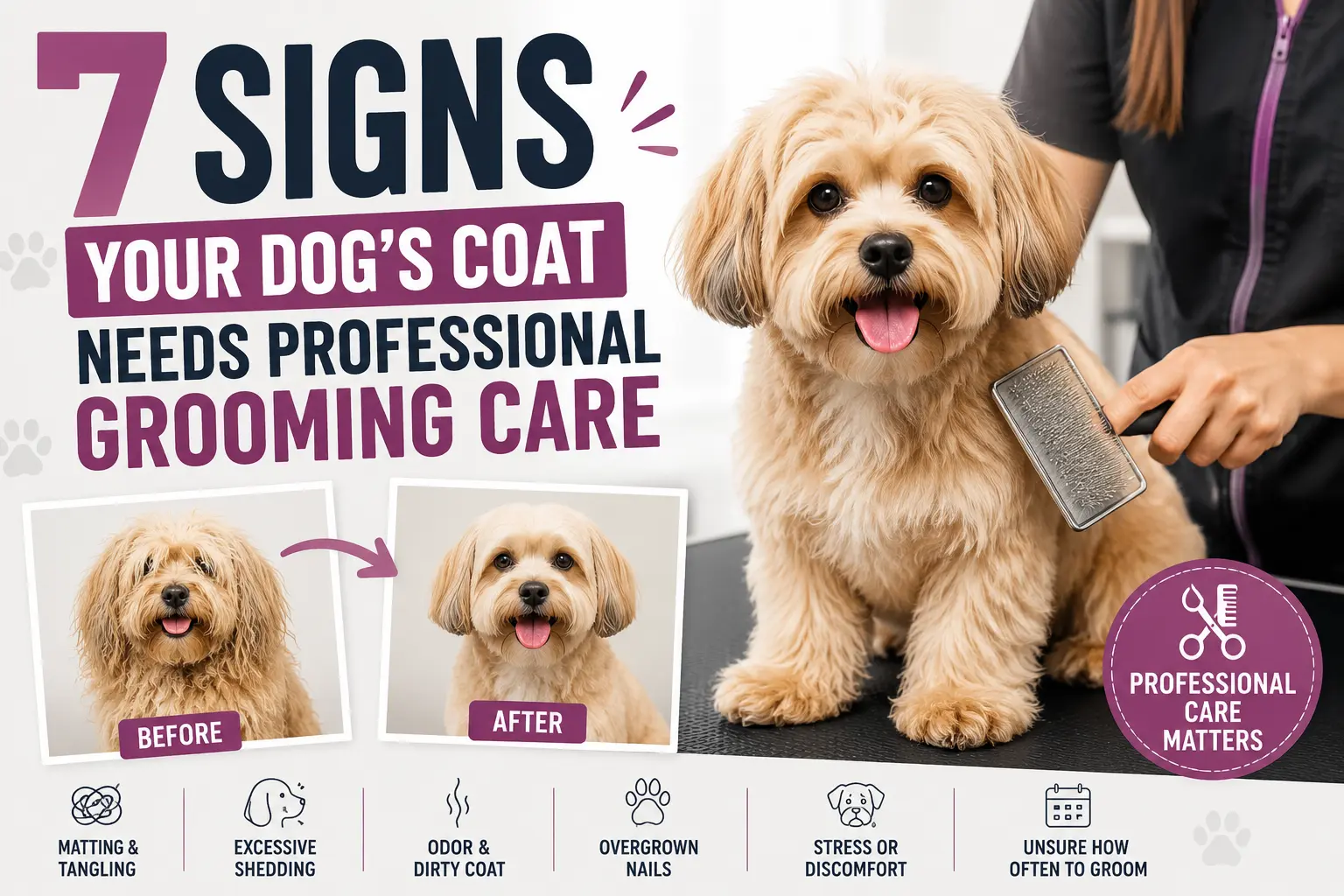
A healthy dog coat should generally be clean, manageable, and comfortable—not excessively tangled, greasy, matted, or difficult to brush. While regular dog grooming at home can handle basic maintenance, some coat problems are signs that it is time to see a professional.
Knowing these warning signs can help prevent painful mats, skin irritation, excessive buildup, and other grooming problems. Here are seven signs that your dog may benefit from professional grooming care.
1. Your Dog’s Coat Is Severely Matted or Tangled
Small tangles can sometimes be managed with regular brushing, but tightly packed mats are a different matter.
Mats form when loose hair becomes tangled and compacted close to the skin. They are particularly common in dogs with long, curly, or thick coats. As mats become tighter, they can pull on the skin and make brushing uncomfortable.
Severe matting can also hide skin problems underneath the tangled hair.
If you notice:
- Large or tight mats
- Tangling around the ears, legs, tail, or belly
- Your dog resisting brushing because it hurts
- Mats that cannot be separated safely with a brush
it is better to consult a professional dog groomer.
A groomer has the appropriate tools and experience to assess the coat and determine whether it can be safely detangled or needs to be clipped.
Important: Never aggressively pull through a tight mat. Doing so can hurt your dog or damage the skin.
2. Brushing No Longer Keeps the Coat Manageable
Regular brushing is one of the most important parts of dog coat care. It removes loose hair, helps prevent tangles, and distributes natural oils through the coat.
However, if you are brushing your dog frequently and the coat still becomes tangled or difficult to manage, the grooming routine may need professional attention.
This can happen with:
- Long-haired breeds
- Curly-coated dogs
- Double-coated breeds
- Dogs that shed heavily
- Coats that have been allowed to grow too long
Professional grooming can help establish a manageable coat length and provide guidance about the appropriate brushing routine for your dog’s coat type.
3. Your Dog Has Excessive Shedding or Loose Undercoat
Shedding is normal for many dogs, but the amount and frequency can vary significantly depending on the breed, coat type, season, and individual dog.
If your home is suddenly covered in loose fur or your dog’s coat feels unusually thick with loose undercoat, professional grooming may help remove excess hair.
A professional groomer can use appropriate grooming tools for the dog’s coat rather than simply cutting the hair short.
This is especially important for owners of double-coated breeds. Their coats have specialized layers, and grooming should be performed according to the needs of the individual coat.
If shedding changes suddenly or is accompanied by bald patches, redness, itching, sores, or other skin changes, speak with a veterinarian rather than assuming it is simply a grooming issue.
4. Your Dog’s Coat Looks Greasy, Dirty, or Has a Persistent Odor
A dirty coat can happen after outdoor activities, muddy walks, swimming, or simply going too long between baths.
But persistent greasiness or odor deserves closer attention.
A professional groomer can provide appropriate bathing, drying, brushing, and coat-cleaning services while taking the dog’s coat type into consideration.
The key is not to over-bathe your dog in an attempt to eliminate every odor. Dogs have different skin and coat needs, and excessive bathing or unsuitable products can cause irritation.
If an unusual smell persists despite appropriate grooming—or comes from the ears, skin, or a specific area—veterinary advice may be appropriate.
5. Your Dog’s Nails, Paws, or Sanitary Areas Are Difficult to Maintain
Professional grooming is not limited to the visible coat.
Some dogs need help maintaining areas that are difficult for owners to groom safely, including:
- Paw hair
- Hair between the paw pads
- Nails
- Hair around the face
- Areas around the rear
- Long hair around the ears
Overgrown hair around the paws can collect dirt and debris, while excessively long nails can interfere with comfortable movement.
If your dog becomes anxious, pulls away, or makes nail trimming difficult, a professional groomer may be able to handle routine grooming more safely and efficiently.
6. Your Dog Becomes Stressed or Difficult to Handle During Grooming
Some dogs simply dislike grooming.
Brushing, bathing, nail trimming, clippers, dryers, and handling sensitive areas can be stressful for dogs that are unfamiliar with the process.
If your dog consistently:
- Hides when grooming tools appear
- Tries to escape
- Growls or snaps during grooming
- Becomes extremely anxious
- Cannot remain safely still
professional assistance may be worthwhile.
A professional dog groomer who regularly works with different temperaments can help make routine grooming more controlled and predictable.
However, severe fear or aggression should not be treated as merely a grooming problem. In those situations, discuss the behavior with your veterinarian or a qualified behavior professional.
7. You Are Unsure How Often Your Dog Needs Grooming
One of the most common questions owners have is: how often should you groom your dog?
There is no single schedule that works for every dog.
Grooming needs depend on factors such as:
- Coat length
- Coat texture
- Breed
- Shedding pattern
- Lifestyle
- Outdoor activity
- Skin condition
- How easily the coat becomes tangled
A short-coated dog may require less professional grooming than a long, curly-coated dog. A dog that regularly plays outdoors may also need more frequent cleaning and brushing.
Instead of following a fixed schedule for every dog, consider the condition of your dog’s coat and discuss an appropriate routine with a professional groomer or veterinarian.
Dog Grooming at Home vs. Professional Grooming
Home maintenance and professional grooming can work together.
| Grooming Task | At Home | Professional Groomer |
| Regular brushing | ✓ | ✓ |
| Basic coat maintenance | ✓ | ✓ |
| Bathing | ✓ | ✓ |
| Nail trimming | Sometimes | ✓ |
| Severe mat removal | Not recommended | ✓ |
| Coat trimming | Limited | ✓ |
| Difficult grooming sessions | Can be challenging | ✓ |
The goal isn’t to choose one approach over the other. Regular dog grooming at home can help maintain the coat between appointments, while professional grooming can handle more complicated maintenance.
How to Maintain Your Dog’s Coat Between Grooming Appointments
Good coat maintenance starts with consistency.
Brush according to the coat type
Different coats require different brushes and techniques. Ask your groomer which brush is appropriate for your dog’s specific coat.
Check problem areas regularly
Pay particular attention to the ears, collar area, armpits, legs, belly, and tail. These areas can develop tangles more easily.
Keep grooming sessions positive
Short, calm sessions can help your dog become more comfortable with brushing and handling.
Use appropriate grooming products
Use products designed for dogs rather than assuming human shampoos or other household products are suitable.
Don’t ignore changes
A sudden change in coat quality, excessive scratching, bald spots, redness, sores, or persistent odor may require veterinary evaluation rather than simply another grooming session.
Choosing a Professional Dog Groomer
When searching for dog grooming outfitter services or a dog groomer near me, look beyond convenience.
Consider asking about:
- Experience with your dog’s coat type
- Grooming techniques and equipment
- How they handle anxious dogs
- Bathing and drying procedures
- Nail and paw care
- What they do when they discover severe matting or skin abnormalities
A good groomer should also be willing to explain what your dog needs rather than recommending unnecessary services.
For owners who are unsure where to start, searching for a professional dog grooming Clothes with experience with the specific breed or coat type can be useful.
Dog Grooming Essentials for a Healthy Coat
A practical grooming routine usually includes:
- Regular brushing
- Appropriate bathing
- Nail maintenance
- Coat inspections
- Ear and paw checks
- Professional grooming when necessary
The right routine depends on the individual dog. Your dog’s coat condition is often a better guide than following a generic grooming schedule.
Final Takeaway
Groomer outfitters is not simply about making a dog look neat. Proper grooming can help maintain a manageable coat and make it easier to notice changes that may require veterinary attention.
Severe matting, difficult-to-manage hair, excessive shedding, persistent odor, neglected nails or paws, grooming-related stress, and uncertainty about your dog’s grooming routine are all good reasons to consider professional help.
Regular home maintenance combined with appropriate professional care can make grooming more comfortable for both you and your dog.
Frequently Asked Questions
How often should dogs be groomed professionally?
There is no universal schedule. Grooming frequency depends on coat type, length, shedding, lifestyle, and how quickly the coat becomes tangled or dirty. Long or curly coats often require more maintenance than short coats.
Can I remove mats from my dog at home?
Small, loose tangles may be manageable with appropriate brushing. Tight or extensive mats should generally be assessed by a professional because aggressive brushing or cutting can injure the skin.
Is professional grooming necessary for every dog?
Not necessarily. Some dogs can have most of their routine grooming needs handled at home. However, professional grooming can be helpful for complex coats, difficult nail trims, severe matting, or owners who cannot safely manage certain grooming tasks.
What are signs of an unhealthy dog coat?
Persistent odor, excessive greasiness, severe matting, unusual hair loss, bald patches, redness, sores, or significant itching can indicate a problem. Some of these signs require veterinary attention rather than grooming alone.
What should I do between professional grooming appointments?
Regular brushing, coat checks, appropriate bathing, and basic nail and paw maintenance can help keep your dog’s coat manageable between professional appointments.