Blog
Dog Grooming Kit: Complete Guide to Choosing the Right Tools

A good dog grooming kit should make routine care easier without forcing you to buy tools your dog does not need. The right combination depends on your dog’s coat type, size, grooming frequency, and whether you groom at home or work professionally.
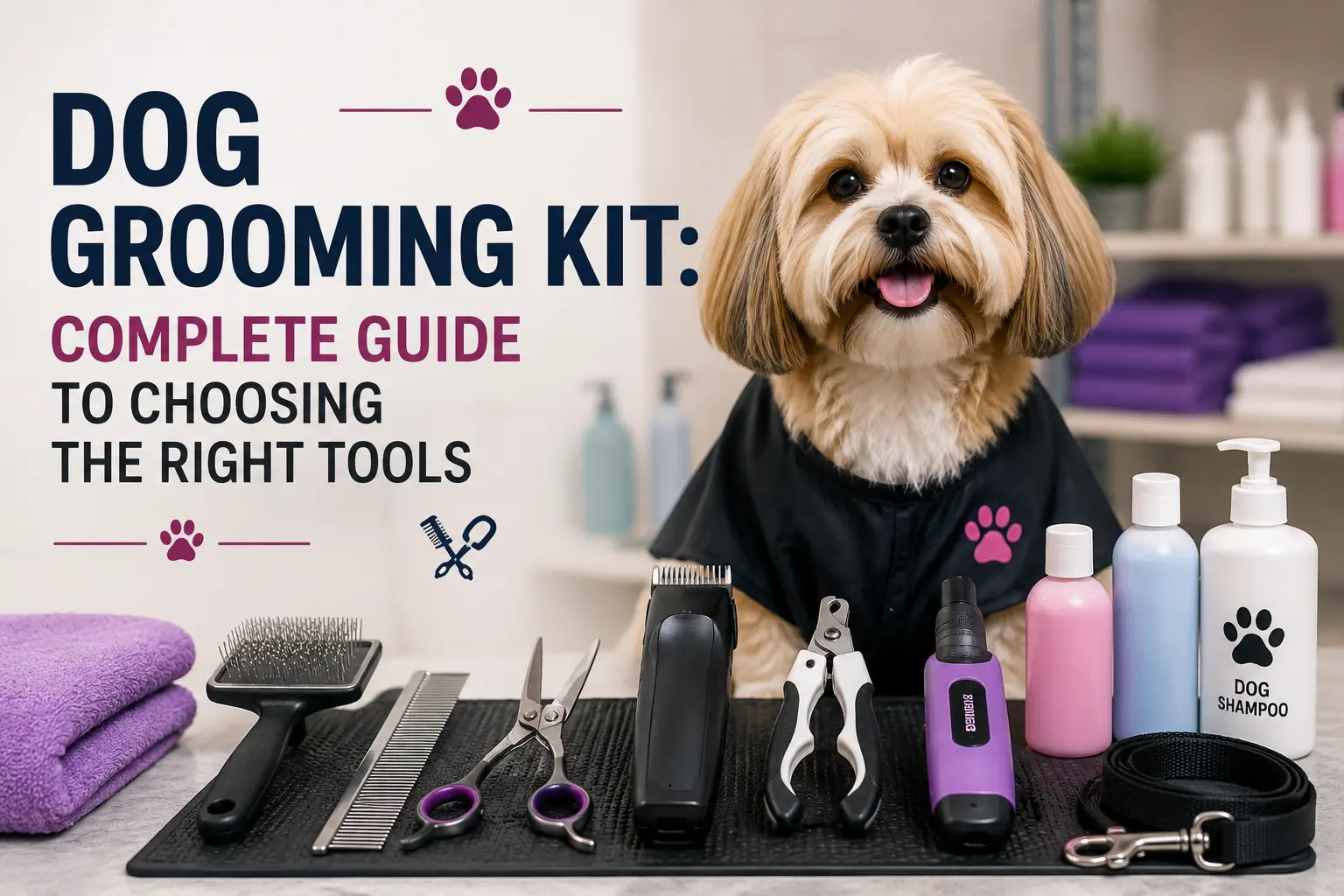
A basic kit may include a brush, comb, nail-care tool, shampoo, towels, and grooming scissors. More advanced setups can include clippers, multiple combs, dryers, grooming tables, and protective apparel.
This guide explains the essential dog grooming tools, what each one does, and how to choose a kit that fits your grooming needs.
What Is a Dog Grooming Kit?
A dog grooming kit is a collection of tools and supplies used to maintain a dog’s coat, nails, skin, and overall cleanliness. Kits can range from simple sets designed for occasional home grooming to complete professional setups containing specialized equipment.
A typical kit may include:
- Slicker brush or bristle brush
- Metal grooming comb
- Grooming scissors
- Dog clippers and clipper guards
- Nail clippers or a nail grinder
- Dog-safe shampoo
- Towels
- Ear-cleaning supplies
- Detangling or dematting tools
- Grooming apron or smock
You do not necessarily need every item. Choosing tools based on your dog’s coat and grooming requirements is usually more practical than buying the largest dog grooming set available.
Essential Dog Grooming Tools for Beginners
If you’re building a dog grooming kit for beginners, start with versatile tools that cover basic maintenance.
1. Grooming Brush
A brush helps remove loose hair, dirt, and minor tangles while distributing natural oils through the coat.
The right brush depends on the coat:
- Slicker brushes: Useful for many medium- and long-coated dogs.
- Bristle brushes: Often suitable for short or smooth coats.
- Undercoat rakes: Designed to help remove loose undercoat from appropriate double-coated breeds.
- Pin brushes: Useful for some longer or flowing coats.
Avoid assuming that one brush works for every breed. A tool that works well on a thick double coat may not be appropriate for a fine or sensitive coat.
2. Metal Comb
A metal comb is particularly useful for checking whether brushing has removed tangles completely.
Run the comb gently through areas that commonly develop mats, such as:
- Behind the ears
- Around the collar
- Under the legs
- Around the tail
- Along the belly
If the comb repeatedly catches, don’t simply pull harder. Work through the tangle carefully or seek professional grooming help when necessary.
3. Grooming Scissors
Grooming scissors can be useful for careful trimming around areas that require precision.
For beginners, safety is more important than speed. Use appropriate grooming scissors, work slowly, and avoid cutting close to the skin unless you have the necessary experience.
4. Nail Clippers or Nail Grinder
Regular nail maintenance is part of basic grooming. Some owners prefer traditional nail clippers, while others find a grinder easier for gradual trimming.
Whichever option you choose, learn where the quick is located before trimming. Cutting into it can cause pain and bleeding.
5. Dog Clippers
A dog grooming kit with clippers can be useful for owners who regularly maintain a dog’s coat at home.
When choosing clippers, consider:
- Motor power
- Blade compatibility
- Heat management
- Corded vs. cordless operation
- Noise and vibration
- Availability of replacement blades and guards
Human hair clippers are not automatically a suitable substitute for equipment designed for dogs.
Choosing a Dog Grooming Kit for Dogs Based on Coat Type
Coat type should be one of the first things you consider when selecting grooming supplies.
| Coat type | Useful tools |
| Short/smooth | Bristle brush, rubber grooming brush, comb |
| Medium | Slicker brush, comb, appropriate scissors |
| Long | Slicker brush, metal comb, detangling tools |
| Thick/double | Undercoat rake, slicker brush, comb |
| Curly/wool-like | Slicker brush, metal comb, appropriate clippers |
Breed is also important because two dogs with similar-looking coats may have different grooming requirements.
For dogs prone to heavy matting, regular brushing and professional grooming may be more appropriate than trying to remove severe mats at home.
Dog Grooming Kit at Home: What Do You Really Need?
A home setup doesn’t have to resemble a professional grooming salon.
For routine maintenance, a practical dog grooming kit at home might contain:
- A suitable brush
- A metal comb
- Nail-care tool
- Dog shampoo
- Grooming towels
- Basic grooming scissors
- Clippers if your dog’s coat requires regular clipping
- A grooming apron or smock
If you groom frequently, a dedicated grooming area can also make the process easier. Keep tools clean, dry, and stored safely between sessions.
For dogs with complicated coats or difficult mats, professional grooming may be safer than attempting advanced clipping techniques without experience.
Building a Professional Dog Grooming Kit
A professional dog grooming kit needs more than a few basic tools because groomers work with different breeds, coat textures, and grooming styles.
A professional setup may include:
- Multiple slicker brushes
- Different comb sizes
- Professional grooming shears
- Straight and curved scissors
- Clippers with interchangeable blades
- Blade guards and attachments
- Undercoat and dematting tools
- Nail grinders
- Professional dryers
- Grooming table
- Towels
- Sanitizing supplies
- Protective grooming apparel
Professional groomers should also think about ergonomics and protection. Grooming can involve constant exposure to loose hair, water, shampoo, and repeated movement.
A quality grooming smock or apron can help keep clothing cleaner and provide practical protection during daily grooming work.
How to Choose the Right Complete Dog Grooming Kit
Instead of choosing a kit because it contains the most items, evaluate the quality and usefulness of each component.
Consider Your Dog’s Coat
Start with coat length, texture, density, and tendency to mat. This determines which brushes, combs, and clipping tools are actually useful.
Check Tool Quality
Cheap tools can be tempting, but poorly designed brushes, dull scissors, or unreliable clippers may make grooming harder.
Look for:
- Comfortable handles
- Durable construction
- Replaceable components where applicable
- Easy cleaning
- Reliable performance
Think About Grooming Frequency
Occasional grooming requires fewer tools than weekly or professional grooming.
If your dog receives professional grooming regularly, you may only need equipment for brushing, nail maintenance, and basic between-appointment care.
Prioritize Safety
A grooming tool should be comfortable for both you and your dog.
Avoid rushing through grooming simply because a kit contains a particular tool. Clippers, scissors, nail grinders, and dematting tools require appropriate technique.
Common Mistakes When Buying Dog Grooming Supplies
Buying One Tool for Every Coat
No single brush or comb works perfectly for every dog.
Choosing Quantity Over Quality
A 20-piece kit isn’t necessarily better than a smaller kit containing durable, useful tools.
Ignoring Replacement Parts
For clippers and grinders, check whether replacement blades, guards, or other components are readily available.
Using Tools Without Learning Their Purpose
A specialized grooming tool can cause discomfort or injury when used incorrectly.
Forgetting Groomer Protection
People often focus entirely on the dog’s grooming needs and overlook their own clothing. Water, loose fur, shampoo, and dander can quickly make grooming uncomfortable.
A suitable grooming smock or apron is especially useful for people grooming multiple dogs.
Practical Tips for Using Your Dog Grooming Set
- Brush before bathing when the coat is suitable for dry brushing.
- Introduce grooming tools gradually to nervous dogs.
- Keep sessions short when training a puppy.
- Check brushes and combs for trapped hair and debris.
- Clean and disinfect reusable tools appropriately.
- Keep scissors and sharp tools away from children and pets.
- Replace damaged or dull equipment.
- Stop if your dog shows significant distress or discomfort.
- Consult a professional groomer or veterinarian when you are unsure about a grooming problem.
Final Takeaway
The best dog grooming kit isn’t necessarily the biggest or most expensive one. It is the collection of tools that matches your dog’s coat, grooming routine, and skill level.
For basic home grooming, start with a suitable brush, comb, nail-care tool, shampoo, towels, and other essentials. If you regularly trim coats, add quality clippers and grooming scissors. Professional groomers will generally need a broader selection of tools, equipment, and protective apparel.
Choosing the right tools—and learning how to use them safely—can make grooming more comfortable, efficient, and manageable for both you and your dog.
Frequently Asked Questions
What should a basic dog grooming kit include?
A basic kit generally needs a coat-appropriate brush, metal comb, nail-care tool, dog shampoo, towels, and basic grooming scissors. Clippers are useful when the dog’s coat requires regular clipping.
What is the best dog grooming kit for beginners?
The best option is one containing the tools that match your dog’s coat rather than simply the largest number of accessories. Beginners should prioritize simple, versatile, easy-to-use equipment.
Can I use a dog grooming kit at home?
Yes. Many routine grooming tasks can be performed at home with appropriate tools and basic knowledge. However, complicated cuts, severe matting, or difficult grooming situations may require a professional.
Do all dogs need clippers?
No. Some dogs can be maintained primarily with brushing, combing, bathing, and nail care. Clippers are more relevant to dogs whose coats require regular trimming or clipping.
What should a professional dog grooming kit contain?
Professional setups commonly include multiple brushes and combs, grooming shears, clippers and blades, nail equipment, dryers, grooming tables, cleaning supplies, towels, and protective apparel.
How often should dog grooming tools be cleaned?
Tools should be cleaned regularly, particularly when used on multiple dogs. Remove hair and debris after use and follow appropriate cleaning or disinfection procedures for the specific tool.