
Blog
Dog Washing Station: Complete Setup Guide for Home & Professional Grooming

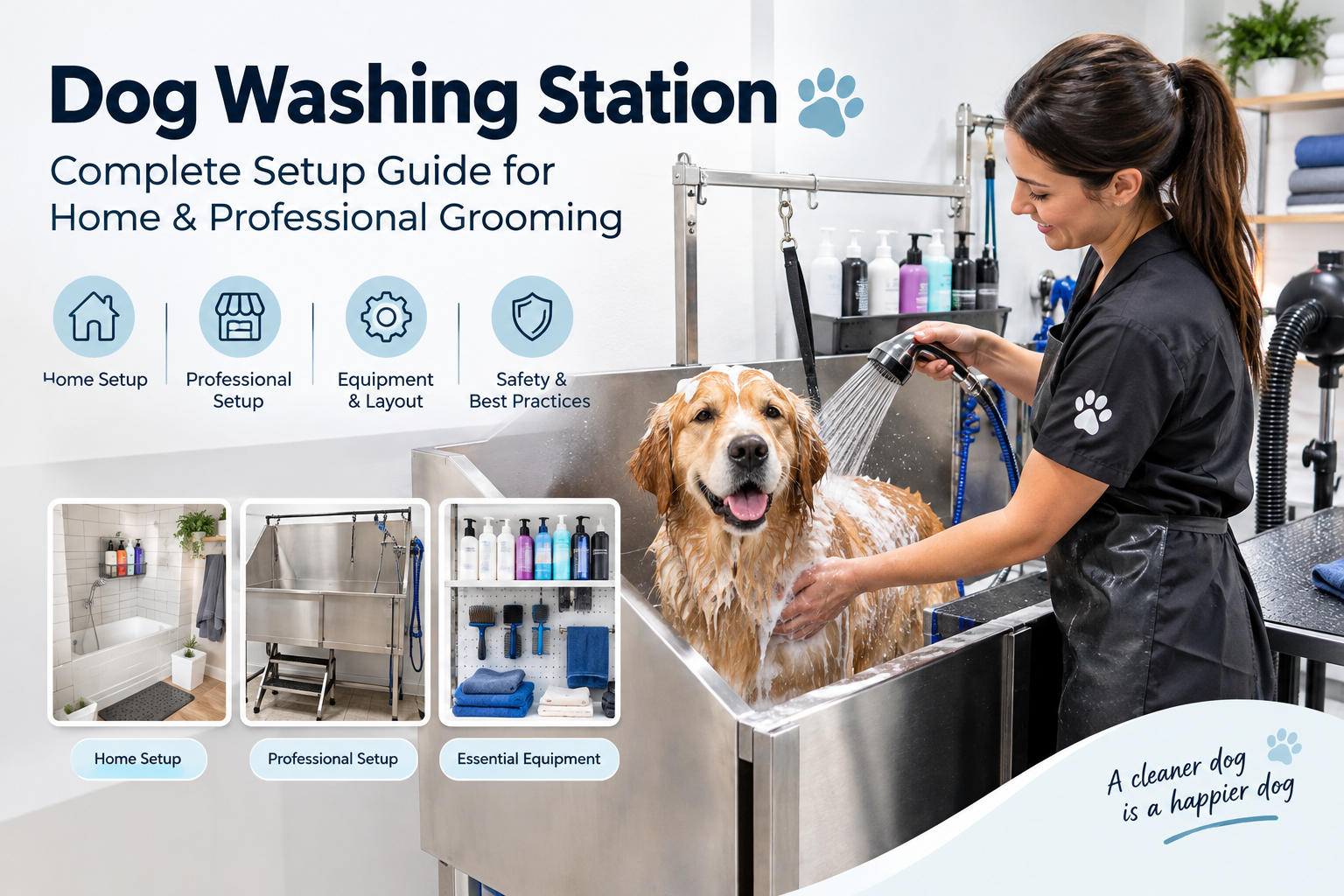
A well-planned dog washing station can make bathing easier, faster, and much less messy. Whether you are setting up a grooming area at home, adding a bathing space to a pet salon, or improving an existing grooming workflow, the right layout matters just as much as the equipment itself.
A good setup should give you enough room to safely handle a dog, control water and drainage, keep shampoo and tools within reach, and clean the area quickly between appointments. Professional groomers also need to think about their own comfort because repeated exposure to water, pet hair, shampoo, and wet dogs can make an ordinary work area difficult to manage.
This guide explains how to plan a dog washing station, what equipment to include, how a home and professional setup differ, and what to consider before buying or building one.
What Is a Dog Washing Station?
A dog washing station is a dedicated area designed specifically for bathing dogs. It normally includes a washing tub or basin, water supply, drainage, a way to secure the dog safely, and space for bathing products and drying equipment.
The setup can be very simple for occasional home use or much more advanced for a professional grooming environment.
A home station may be a modified bathroom, utility room, laundry area, outdoor washing space, or a dedicated pet bathtub. A professional setup normally needs stronger drainage, better water management, easier cleaning, and enough room to handle several appointments throughout the day.
The main goal is the same in both situations: keep the dog secure, keep the groomer comfortable, and make the bathing process organized.
Dog Washing Station vs. Dog Bathing Station
The terms are often used interchangeably, but the setup can vary depending on how the space will be used.
A basic dog bathing station may focus mainly on providing a place to wash a dog. A more complete washing area can include bathing, rinsing, shampoo storage, drying equipment, towels, restraints, grooming tools, and cleaning supplies.
For a family with one dog, a simple tub may be enough. For a professional groomer, the bathing area becomes part of a larger workflow that may include pre-bath brushing, washing, rinsing, drying, and finishing.
That difference is important when planning your space. Buying a large amount of equipment does not automatically make a setup better. The layout should match the number and size of dogs you expect to handle.
What Should a Dog Washing Station Include?
Before buying anything, think about the actual bathing process from beginning to end. A useful station should help you move through each step without constantly leaving the dog unattended.
1. A Suitable Washing Tub
The tub is the main part of the station. It should be large enough for the dogs you normally handle, but not so deep or awkward that lifting and positioning them becomes difficult.
For professional use, consider:
- Tub height that reduces unnecessary bending
- Enough width for different dog sizes
- A non-slip surface
- Easy access around the dog
- Strong construction
- A convenient location for the water supply
For home use, a dedicated pet tub is not always necessary. A suitable utility sink, bathtub, or other washable area may work for smaller dogs, provided the dog can be controlled safely.
2. Reliable Water Supply
A washing area should provide easy access to both warm and cold water. A handheld sprayer is particularly useful because it allows you to rinse different areas of the coat without forcing the dog into uncomfortable positions.
The hose should be long enough to reach the entire tub.
For a professional environment, the controls should be easy to reach while you are working. You do not want to repeatedly walk away from the dog just to adjust the water.
3. Proper Drainage
Drainage is one of the most important parts of a bathing setup and one that is easy to overlook.
Dog hair can quickly collect around drains. Shampoo residue, dirt, and loose coat can make the problem worse. A good drainage system should therefore be easy to access and clean.
Use an appropriate hair-catching system where possible and develop a routine for checking the drain after each appointment.
A beautiful washing area is not very useful if water drains slowly during a busy grooming day.
4. Safe Restraint
Dogs can move unexpectedly when they are wet. A suitable grooming restraint can help reduce unnecessary movement during washing, but it should be used properly and never in a way that creates a choking or strangulation risk.
The bathing area should allow the groomer to control the dog without relying on excessive force.
The dog’s size, temperament, mobility, and comfort all matter. Never assume that one restraint setup will work equally well for every dog.
5. Storage for Shampoo and Supplies
Keep frequently used items close to the station, but avoid cluttering the bathing area.
Useful supplies may include:
- Dog shampoo
- Conditioner
- Detangling products
- Ear protection or cleaning supplies when appropriate
- Towels
- Brushes
- Combs
- Water nozzles
- Cleaning products
- Grooming restraints
Wall shelves, mounted storage, cabinets, or dedicated containers can make a big difference in a professional salon.
6. Drying Area
Bathing is only one part of the process. A wet dog still needs to be dried safely and thoroughly.
Your setup may include towels, a suitable pet dryer, a high-velocity dryer, or another drying method appropriate for the dog and the grooming environment.
The drying area does not necessarily need to be directly inside the tub area. In a professional salon, separating washing and drying zones can improve workflow and reduce congestion.
Dog Washing Station for Home: What Do You Actually Need?
A dog washing station for home does not have to look like a commercial grooming salon.
For occasional bathing, the priority should be convenience, safety, easy cleanup, and access to suitable water and drainage.
A practical home arrangement might include a bathtub or utility tub, handheld shower attachment, non-slip mat, towels, shampoo storage, and a place to dry the dog.
Before setting up a permanent area, consider where the water will go and how you will clean pet hair afterward.
Small Dogs
Small dogs are generally easier to manage in compact spaces. A laundry sink or appropriately sized utility tub may work well, provided it is safe and comfortable for the dog.
Medium and Large Dogs
Larger dogs require more room to turn, stand, and sit. Trying to wash a large dog in a cramped space can make the process uncomfortable for both the pet and the person bathing it.
Consider the dog’s weight as well. If lifting the dog into the tub creates a strain risk, a lower-access setup may be more practical.
Professional Dog Washing Station Setup
A professional dog washing station needs to support repeated use, efficient cleaning, and a wide range of dogs.
Professional groomers may bathe several dogs during a working day, so the station needs to be designed around workflow rather than appearance alone.
A strong setup should make these stages easy:
Pre-bath → bathing → rinsing → draining → towel drying → mechanical drying → grooming
The less unnecessary movement between these stages, the more efficient the grooming process becomes.
Think About the Height
Repeated bending can become uncomfortable during a full day of grooming. A properly positioned tub can help reduce unnecessary strain.
The correct height depends on the groomer, tub design, and the type of dogs being handled. There is no universal measurement that works for every person.
Think About Cleaning
A professional station should be quick to disinfect and rinse.
Avoid unnecessary surfaces where hair, water, and product residue can collect. Choose equipment that can withstand frequent cleaning and regular use.
Think About Traffic Flow
Do not place the bathing station where dogs, staff, dryers, storage carts, and customers constantly cross paths.
A clear workflow can reduce interruptions and make the salon easier to manage.
Dog Grooming Bath Station: Essential Layout Ideas
A dog grooming bath station works best when the items you use most are positioned within easy reach.
Imagine standing beside the tub with a wet dog. You should be able to reach the sprayer, shampoo, towels, and restraint without repeatedly stepping away.
A practical layout can have:
Inside or beside the tub: restraint, sprayer, shampoo
Immediately nearby: towels, brushes, conditioner, cleaning supplies
Within the drying zone: dryer, drying table or suitable surface, additional towels
Away from splash zones: electronics, paperwork, packaging, and products that should stay dry
This small amount of planning can make a busy grooming space considerably easier to work in.
How to Choose a Dog Bath Station
When comparing a dog bath station, look beyond appearance and price.
Ask yourself:
How many dogs will you bathe?
A station used once a week at home has very different requirements from a professional station used throughout the day.
What size dogs will you handle?
Measure the available space and consider both the dog’s body size and the room needed for you to work around it.
Is the floor safe?
Wet floors can become slippery. The tub area should provide good footing and the surrounding floor should be easy to clean.
How easy is the tub to clean?
Smooth, washable surfaces are generally more practical than complicated designs that trap hair and residue.
Where does the water drain?
Check the drainage arrangement before installation. A poor drainage setup can quickly become a daily frustration.
Can you reach everything safely?
You should not need to stretch awkwardly or leave the dog unattended to reach basic bathing supplies.
Dog Grooming Washing Station Equipment Checklist
A dog grooming washing station can be customized according to the type of grooming work you perform.
Here is a practical checklist:
| Item | Why It Matters |
| Washing tub | Provides a dedicated bathing area |
| Handheld sprayer | Makes rinsing easier |
| Drain and hair catcher | Helps manage fur and water flow |
| Non-slip surface | Improves footing |
| Grooming restraint | Helps control movement safely |
| Shampoo storage | Keeps products organized |
| Towels | Needed for initial drying |
| Pet dryer | Supports thorough drying |
| Cleaning supplies | Helps maintain hygiene |
| Grooming tools | Useful for coat preparation and finishing |
You do not necessarily need every item on the list immediately. Start with what your grooming routine actually requires and expand the setup as your workload grows.
What Should a Groomer Wear Around a Washing Station?
A bathing area creates a different clothing challenge from dry grooming work.
Water, loose hair, shampoo, and wet dogs can quickly make ordinary clothing uncomfortable. For professionals, practical grooming apparel can make the work environment easier to manage.
Look for workwear that is easy to clean, comfortable during movement, and appropriate for repeated exposure to water and pet hair.
Groomer Outfitters focuses specifically on dog grooming apparel, including waterproof jackets, grooming smocks, aprons, shirts, pants, and custom uniforms.
For example, a professional grooming tunic can combine storage with mobility and hair-resistant fabric features. The Premium Blue & Black Dog Grooming Tunic Uniform is designed for grooming environments and includes front pockets, a zipper closure, and a lightweight, water-resistant and hair-resistant fabric construction.
You can also learn more about the company’s manufacturing focus and grooming apparel range on the Groomer Outfitters About Us.
The key point is that clothing should support the bathing workflow rather than become another problem during the appointment.
Common Dog Washing Station Mistakes
Many problems come from planning the appearance of the station before thinking about how it will actually be used.
Making the Area Too Small
A compact setup may look efficient until a large dog needs to be washed.
Leave enough working space around the tub for movement, handling, and cleanup.
Ignoring Drain Maintenance
Pet hair is inevitable. A drainage system that cannot handle hair and frequent cleaning will create problems over time.
Keeping Everything on the Floor
Bottles, towels, tools, and equipment left around the floor can become obstacles.
Use practical storage wherever possible.
Poor Water Control
A sprayer with an awkward hose or difficult controls can slow down every bath.
Test the water flow and positioning before committing to the final setup.
Forgetting the Groomer’s Clothing
Wet grooming work can quickly soak ordinary shirts and pants. Clothing that is difficult to clean or holds onto hair can become inconvenient during a full day of appointments.
Prioritizing Looks Over Workflow
A professional-looking station is useful, but only when it also works well.
The best layout is the one that lets you safely move through the bathing process with minimal unnecessary movement.
How to Keep a Dog Washing Station Clean
Cleaning should be part of the workflow rather than something saved until the end of the day.
After each dog, remove loose hair, rinse the tub and surrounding surfaces, clean product residue, and check the drain.
At regular intervals, inspect the sprayer, hoses, restraints, storage areas, and other equipment for buildup or wear.
Keep clean towels separate from used towels, and store products in a way that reduces contamination or accidental spills.
A simple cleaning routine is easier to maintain consistently than a complicated system that staff rarely follow.
Is a Dog Washing Station Worth It?
For occasional home grooming, a dedicated station may not be necessary. A suitable existing tub or utility area may be enough.
For professional grooming, however, a properly designed washing area can become an important part of the daily workflow.
The real benefit is not simply having a special tub. It is having a dedicated space where bathing, rinsing, drainage, drying, cleaning, and storage work together.
That is what makes a washing station practical.
Conclusion
Choosing or building the right dog washing station starts with understanding how you actually bathe and handle dogs.
For home use, focus on safety, accessibility, drainage, and easy cleanup. For professional grooming, go further by planning the tub height, storage, water control, drainage, drying area, cleaning routine, and overall workflow.
The right setup does not need to be unnecessarily complicated. It needs to be suitable for the dogs you handle, comfortable for the person doing the work, and easy to maintain between appointments.
And because bathing is only one part of professional grooming, the surrounding setup matters too. Proper grooming apparel can help manage water and pet hair while providing the mobility and comfort needed during long working hours. Groomer Outfitters specializes in professional grooming apparel and manufacturing solutions for independent groomers, salons, mobile grooming businesses, and other grooming-related businesses.
Explore the Groomer Outfitters to see its professional grooming apparel range.
Frequently Asked Questions
What is the best type of dog washing station?
The best setup depends on where it will be used, the size of the dogs, how often bathing takes place, and the available space. Home users may need only a practical tub and handheld sprayer, while professional groomers generally need a more durable and workflow-focused setup.
Can I make a dog washing station at home?
Yes. A suitable bathtub, utility sink, or dedicated pet tub can be used depending on the dog’s size and your available space. Prioritize safe footing, comfortable handling, water access, and drainage.
What should I put next to a dog washing station?
Keep frequently used items such as shampoo, conditioner, towels, brushes, restraints, and cleaning supplies within easy reach. Dry or sensitive items should be stored away from splash areas.
How do I prevent dog hair from clogging the drain?
Regularly remove loose hair before it reaches the drain and use an appropriate hair-catching system. Cleaning the drain after bathing sessions helps prevent buildup.
Is a professional dog washing station necessary for a grooming salon?
A dedicated professional setup is not legally or universally required simply because a business is a salon, but it can make the bathing workflow more practical. The appropriate equipment depends on the salon’s design, services, dogs handled, and local requirements.
What should groomers wear while bathing dogs?
Groomers generally benefit from clothing that is comfortable, easy to clean, and suited to water and pet hair exposure. Waterproof or water-resistant outerwear, practical smocks, aprons, and suitable grooming uniforms can be useful depending on the bathing workflow.
What is the difference between a dog bath station and a dog washing station?
In everyday use, the terms can describe the same type of setup. Some people use “bath station” for the tub itself, while “washing station” can refer to the wider setup that includes water, drainage, storage, restraints, and related equipment.
How much space does a dog washing station need?
There is no single size that works for every setup. The station needs enough room for the tub, the dog, the groomer, safe movement, and access to equipment. Larger dogs and professional workloads generally require more working space.


One thought on “Dog Washing Station: Complete Setup Guide for Home & Professional Grooming”