
Blog
Flea & Tick Prevention for Dogs: Types, Safety Tips and Grooming Guide

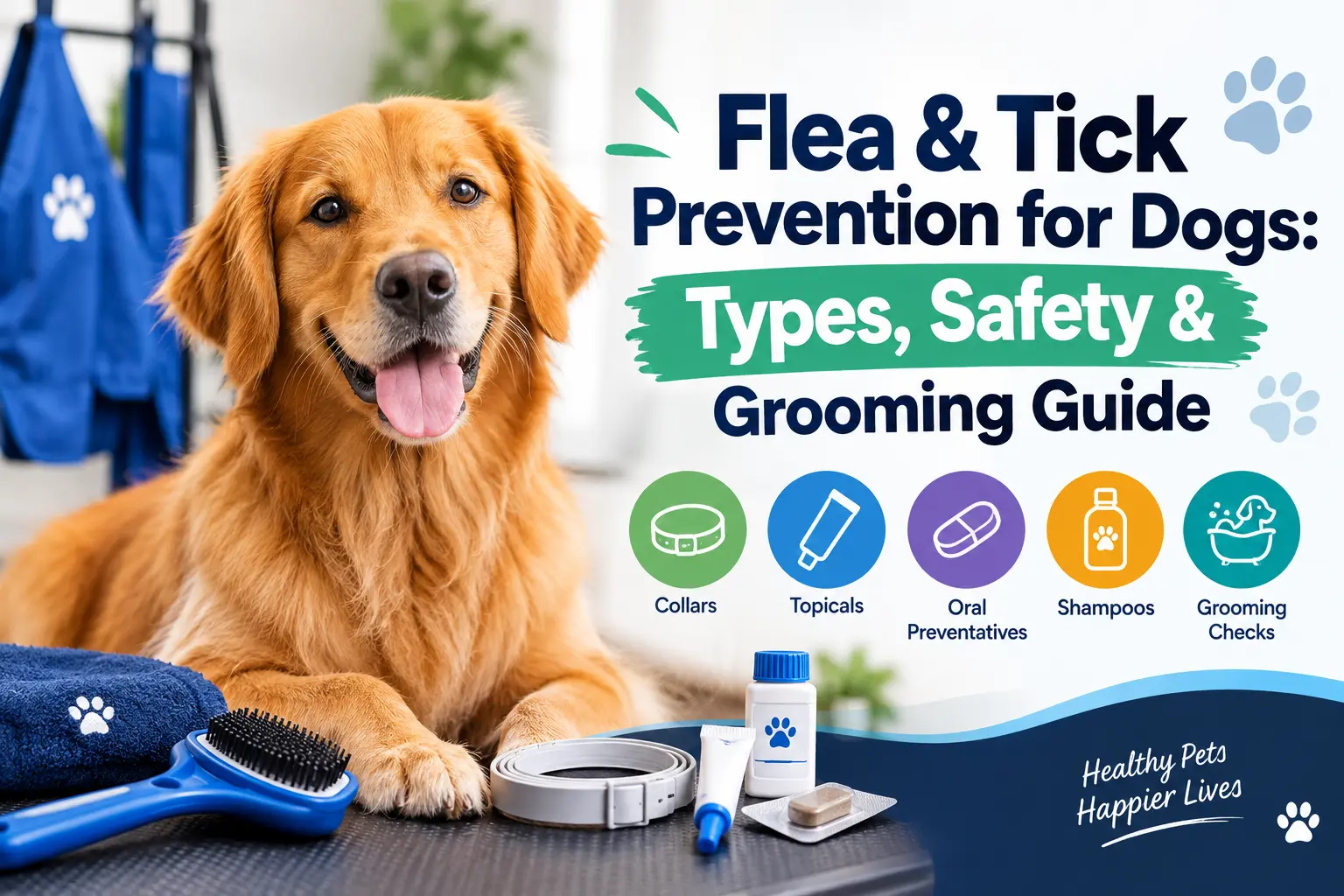
Fleas and ticks are more than a nuisance for dogs. They can irritate the skin, trigger allergic reactions, and create a larger problem when an infested dog carries parasites into the home, kennel, or grooming environment. That is why flea and tick prevention for dogs should be viewed as an ongoing part of responsible pet care rather than something to consider only after parasites appear.
For pet owners, choosing between flea collars, topical treatments, oral preventatives, shampoos, sprays, and other options can be confusing. There is no single flea and tick preventative that is automatically right for every dog. The appropriate choice depends on factors such as the dog’s age, weight, health, lifestyle, exposure risk, and the product label.
For professional groomers, parasite awareness is also important. A grooming appointment may provide an opportunity to notice fleas, flea dirt, ticks, irritated skin, or areas where a pet is scratching excessively. Groomers should not diagnose or prescribe parasite medication, but they can recognize visible concerns and advise owners to speak with a veterinarian.
Why Flea and Tick Prevention Matters
Fleas can cause itching and may contribute to flea allergy dermatitis. Heavy infestations can also cause more serious problems, particularly in vulnerable animals. Ticks are another concern because they can transmit infectious organisms to pets and may be carried into homes by dogs after outdoor exposure.
A preventative program is intended to reduce the chance of infestation before it becomes difficult to manage. CAPC recommends consistent, year-round control for dogs because flea and tick activity can continue beyond a short seasonal window, and some infestations can become established in homes and kennels.
This matters even more when several pets share the same environment. Flea infestations can take time to control, and treating only one pet may not solve the wider problem.
What Are the Main Types of Flea and Tick Preventatives?
Flea and tick products come in several forms. Each has a different application method, duration, and set of label requirements.
1. Topical Flea and Tick Treatments
Topical treatments, often called spot-ons, are liquid products applied directly to a dog’s skin according to the product label. Depending on the specific formulation, these products may target fleas, ticks, or other parasites.
One advantage of a topical treatment is that it does not require the dog to swallow a tablet or chew. However, application still needs to be done carefully. The product must match the dog’s species, life stage, and weight range, and the directions on the label should be followed exactly.
Topical products can also have specific instructions around bathing, swimming, or contact with other animals. Those instructions vary by formulation, so there is no universal waiting period that applies to every product.
2. Oral Flea and Tick Preventatives
Oral preventatives are given by mouth and may come as tablets or chewable products. Some products are designed to provide flea control, tick control, or both.
This option can be convenient for owners who prefer not to apply a liquid to the coat. However, oral products are medications, and some classes of flea and tick treatments have specific safety considerations.
The FDA has warned that products in the isoxazoline class can be associated with neurologic adverse events in some dogs and cats, including tremors, ataxia, and seizures. The agency still considers these products safe and effective for the majority of dogs and cats, but recommends discussing their suitability with a veterinarian.
3. Flea and Tick Collars
Flea and tick collars are designed to provide parasite protection over an extended period, depending on the product.
They can be convenient because there is no monthly liquid application to remember, but the collar still needs to be used exactly according to its label. PetMD notes that modern flea collars work differently depending on their active ingredients and that they may be suitable for some pets but not others.
The fit also matters. A collar that is too loose may not work as intended, while one that is too tight can create discomfort or skin irritation.
4. Flea and Tick Shampoos
Flea and tick shampoos can be useful as part of a grooming or parasite-control routine, but they should not automatically be treated as a replacement for a complete preventative program.
Shampoos work during bathing and can help remove or kill parasites depending on their formulation and label claims. Some products are specifically labeled for fleas and ticks, while others are intended for different grooming or skin concerns.
The FDA advises following product directions carefully and using only products labeled for the particular animal, life stage, and weight range.
For professional groomers, this distinction is important. A grooming shampoo is not automatically equivalent to a long-term flea and tick preventative.
Which Flea and Tick Prevention Is Right for Your Dog?
There is no universal “best flea and tick preventative for dogs.” The right choice depends on the individual animal and the product’s approved use.
Before choosing a product, consider:
Dog’s Age
Puppies may have different minimum age requirements than adult dogs. Never assume that a product suitable for an adult dog is automatically appropriate for a puppy. The package label should specify the approved life stage and minimum age.
Dog’s Weight
Many flea and tick products are divided into weight ranges. Giving a product intended for a larger dog can result in excessive exposure, while using the wrong dose may not provide the intended protection.
Lifestyle
A dog that regularly hikes, visits wooded areas, plays outdoors, or spends time around other animals may have different exposure risks from a dog that stays indoors most of the time.
Health History
Dogs that are sick, elderly, pregnant, nursing, taking other medications, or have previously reacted to parasite products may need additional veterinary guidance before a product is chosen.
Local Parasite Risk
Tick species and activity vary by region. The CDC recommends discussing local tickborne disease risks and appropriate prevention with a veterinarian.
Flea vs. Tick Prevention: Do You Need Both?
Fleas and ticks are different parasites, and not every product provides the same level of control against both.
Some products are specifically labeled for fleas, some for ticks, and some for both. That means looking only at the product name is not enough. Owners should check the active ingredients, target parasites, duration, minimum age, weight range, and application instructions listed on the packaging.
A veterinarian can also help determine which approach fits the dog’s health history and exposure risk.
How Groomers Can Spot Possible Flea or Tick Problems
A grooming appointment can sometimes reveal signs that an owner has not noticed at home.
During brushing, bathing, drying, or coat inspection, a groomer may notice:
- Fleas moving through the coat
- Dark flea dirt around the skin
- Frequent scratching
- Red or irritated skin
- Areas of hair loss
- Ticks attached to the skin
- Increased licking or chewing
- Heavy parasite exposure around the ears, neck, or other hidden areas
Ticks can be difficult to see in long or dark coats. The CDC recommends checking pets carefully, particularly after outdoor exposure, and removing ticks promptly when found.
A groomer should avoid diagnosing a medical condition or recommending a medication dose. Instead, visible parasite concerns can be communicated to the pet owner, who can then seek veterinary advice.
Flea and Tick Prevention During a Grooming Appointment
Grooming itself is not a substitute for parasite prevention, but a professional grooming routine can support overall coat and skin observation.
Regular brushing helps you inspect areas of the coat that are easy to overlook. Bathing can also make it easier to examine the skin and identify visible issues.
For professional groomers, clean and practical workwear is equally important. During bathing and parasite checks, protective clothing can help keep water, loose hair, and grooming debris off the groomer’s regular clothing.
For example, professional Grooming Smocks are designed for active salon environments and can provide a practical layer during everyday grooming work. Groomer Outfitters describes its smocks as lightweight, durable, and hair-resistant.
A Grooming Aprons can also be useful when brushing, bathing, or handling grooming tools. The site’s apron category includes designs made for professional grooming work, including options with front pockets.
Bathing a Dog With Fleas: What Should You Know?
If a dog arrives at a grooming salon with visible fleas, the groomer should first follow the salon’s parasite protocol and communicate with the owner.
A flea shampoo may be appropriate when the product label specifically permits its use, but not every flea shampoo provides long-term protection. The FDA advises owners to follow the label carefully and to consult a veterinarian when needed, particularly when the animal has a health condition or is in a sensitive life stage.
The bathing environment also matters. A dedicated Dog Washing Station Guide can help organize bathing supplies and make the grooming workflow easier for professional and home grooming setups.
Groomers should also clean and disinfect appropriate surfaces and equipment according to their salon’s hygiene procedures after handling a pet with a suspected infestation.
What Should You Do If You Find a Tick?
If you notice a tick attached to a dog, prompt removal is recommended. The CDC advises checking pets for ticks daily after outdoor exposure and removing ticks as soon as they are found.
The exact procedure should follow established veterinary or public-health guidance. If a dog has multiple ticks, appears unwell, or develops signs of illness after a tick bite, the owner should contact a veterinarian.
A groomer can document what was observed and communicate it clearly to the owner without attempting to diagnose a tickborne disease.
Safety Rules for Flea and Tick Products
Flea and tick products are not interchangeable. One of the most important safety rules is to use a product only for the species, age, life stage, and weight stated on the label.
The EPA specifically warns against using dog flea and tick products on cats or vice versa because some pesticides can be more toxic to one species than another. Products should also be used only in the amount and manner specified by the label.
The FDA similarly recommends reading the label before each use, following application instructions exactly, and keeping treatment products away from children and other pets when required.
Pet owners should also tell their veterinarian about other medicines or parasite products the animal is currently receiving.
Can Fleas and Ticks Come Back After Treatment?
Yes. Seeing fleas or ticks after treatment does not automatically mean a product has failed.
Parasites can continue to emerge from the surrounding environment, and reinfestation can occur when pets are exposed to infested areas. CAPC notes that established flea infestations can take months to bring under control, while tick infestations can also persist in homes and kennels.
That is why successful control may involve more than treating the dog itself.
Owners may need to discuss environmental control, treatment of other pets, cleaning routines, and ongoing prevention with a veterinarian or qualified pest professional.
Year-Round Flea and Tick Prevention
Many owners think of fleas and ticks as a warm-weather issue, but parasite activity is not limited to a single season.
CAPC recommends year-round flea and tick control for dogs, while the CDC notes that ticks can be encountered throughout the year depending on location and conditions.
Indoor environments can also support flea populations. This is one reason prevention should be based on the dog’s overall risk rather than simply the calendar.
A consistent schedule also reduces the chance of missed treatments, which can leave gaps in protection.
Flea and Tick Prevention Checklist for Dog Owners
A simple prevention routine can include:
- Choose a flea and tick product appropriate for your dog’s species, age, weight, and health history.
- Follow the label exactly.
- Keep track of treatment dates so doses are not accidentally missed.
- Check your dog for ticks after outdoor activities.
- Inspect the skin and coat regularly.
- Wash or clean bedding and affected household areas when appropriate.
- Treat all pets in the home according to veterinary guidance when an infestation is present.
- Contact a veterinarian if your pet has a reaction or signs of illness.
What Groomers Should Keep in Mind
Professional groomers play an important observational role because they work closely with a dog’s skin and coat.
A consistent grooming routine can help identify changes such as excessive scratching, irritated skin, unusual hair loss, flea dirt, or attached ticks. Groomers can then communicate what they observe to the owner.
For daily salon work, practical clothing is also important. Grooming professionals routinely deal with water, loose fur, shampoos, brushing debris, and repeated movement. Groomer Outfitters offers Grooming Jackets designed for professional grooming environments, including lightweight and hair-resistant options.
Similarly, Grooming Pants and Grooming Jumpsuits can form part of a practical salon workwear setup. Groomer Outfitters currently lists both categories among its professional grooming apparel range.
For more workwear guidance, you can also reference the existing Dog Grooming Smock Guide and Dog Grooming Apron Guide.
What If a Dog Has a Reaction to a Flea or Tick Product?
Owners should monitor their pets after using a flea or tick product, especially when using it for the first time.
The FDA lists possible adverse events and recommends veterinary consultation if a pet experiences a reaction. For isoxazoline products, reported neurologic events include tremors, ataxia, and seizures in some dogs and cats.
Product labels should always be kept available so the veterinarian can identify the exact treatment, active ingredients, and dosage used.
A groomer who notices unusual behavior or a visible reaction should stop the grooming process when appropriate and notify the owner rather than attempting to determine the cause.
Final Thoughts
Choosing flea and tick preventatives for dogs is not simply about finding a popular product. The important factors are the dog’s age, weight, health, lifestyle, exposure risk, and the specific instructions and approved uses of the product.
Topicals, oral treatments, collars, shampoos, and other options all have different roles. The safest approach is to follow the product label and involve a veterinarian when there are questions about the right preventative, existing health conditions, medication interactions, or possible reactions. (U.S. Food and Drug Administration)
For professional groomers, parasite awareness is closely connected to good coat inspection, salon hygiene, and practical workwear. Spotting a possible issue early and communicating it clearly to the pet owner can help ensure the dog receives the appropriate veterinary care.
Frequently Asked Questions
What is the best flea and tick preventative for dogs?
There is no single product that is best for every dog. The appropriate option depends on factors such as age, weight, health, lifestyle, local parasite exposure, and the product’s approved uses. A veterinarian can help determine which option is suitable.
Are flea collars better than topical treatments?
Neither option is automatically better for every dog. Collars and topical treatments work differently and have different application requirements. The decision should be based on the dog’s needs and the product label.
Can I use flea medicine made for dogs on a cat?
No. Products should only be used on the species listed on the label. The EPA specifically warns that some dog products can be toxic to cats.
How often should dogs receive flea and tick prevention?
The schedule depends on the particular product. Some treatments are monthly, while others are designed for longer intervals. Follow the exact product label rather than assuming that every flea and tick preventative uses the same schedule.
Do flea shampoos replace flea prevention?
Not necessarily. A flea shampoo may help with parasites during bathing, but it should not automatically be considered a substitute for an ongoing preventative program. The product label should explain what the treatment is designed to do.
Should groomers treat a dog for fleas?
Groomers should follow their salon’s established parasite policy and use only products that are labeled for professional use and the appropriate animal. Groomers should not prescribe medication or determine a veterinary treatment plan.
One thought on “Flea & Tick Prevention for Dogs: Types, Safety Tips and Grooming Guide”