Blog
Dog Grooming Tips for Professional Groomers & Grooming Salons

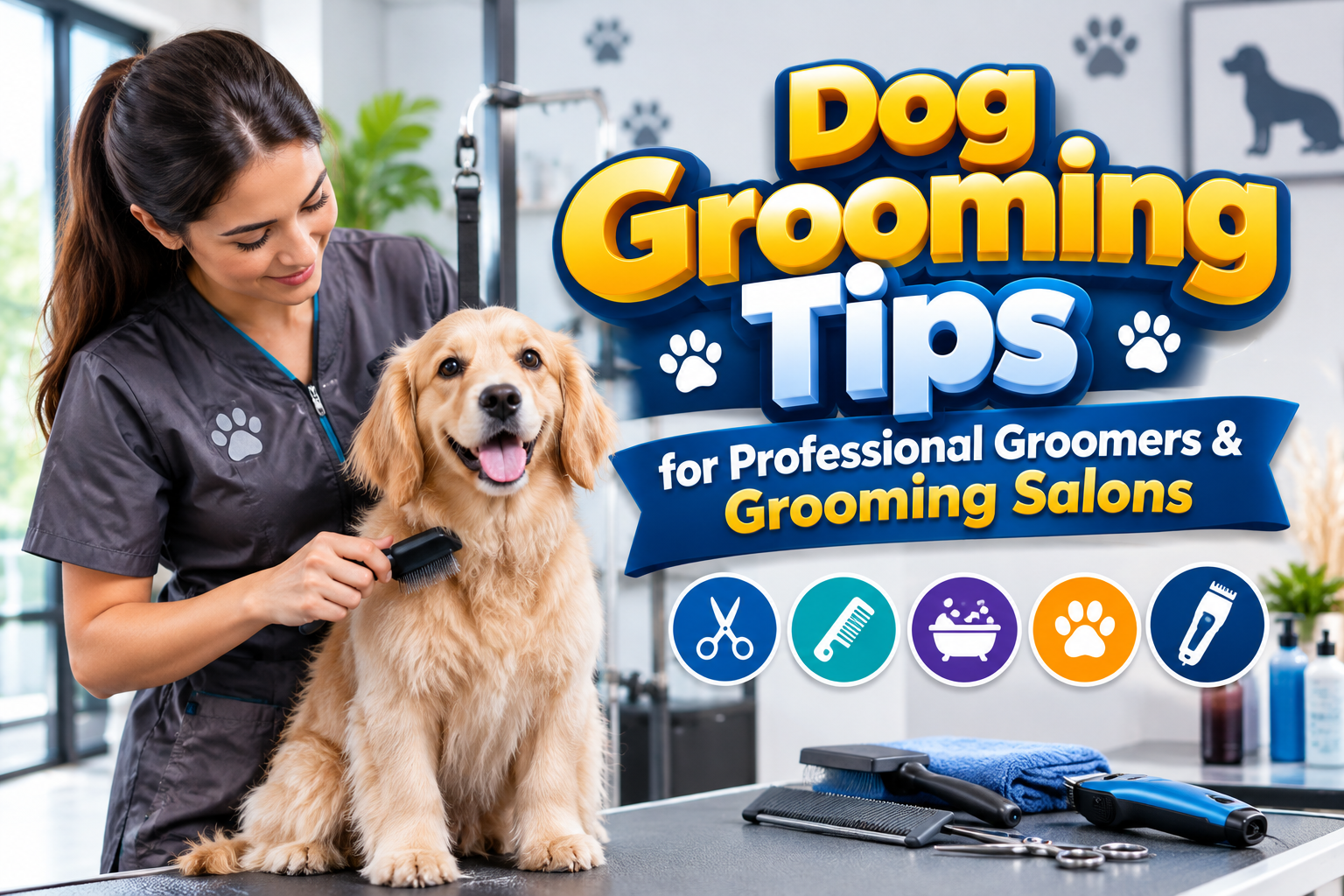
Professional dog grooming is more than simply bathing, brushing, trimming, and styling a dog. A successful grooming session requires the right techniques, appropriate tools, good time management, safe handling, hygiene, and a professional salon workflow.
Whether you are an experienced dog groomer, manage a busy grooming salon, operate a mobile grooming business, or are building your professional grooming career, following practical dog grooming tips can help you create a safer and more consistent experience for both dogs and clients.
Professional grooming also involves protecting yourself during daily work. Groomers regularly deal with water, loose pet hair, shampoo, dryers, grooming products, and repetitive movement. Wearing suitable dog grooming apparel, such as a lightweight grooming smock, grooming uniform, or practical grooming workwear, can make everyday salon work more comfortable and professional.
This guide covers practical dog grooming tips for professional groomers and grooming salons, from preparing the dog and choosing the right tools to maintaining hygiene, improving workflow, and selecting suitable grooming apparel.
1. Understand the Dog Before Starting the Grooming Session
Every dog has different grooming requirements. Coat type, size, breed characteristics, age, skin condition, temperament, and previous grooming experience can all affect the grooming process.
Before placing a dog on the grooming table, take a few moments to observe the dog.
Check:
- Coat condition
- Mats and tangles
- Skin appearance
- Ears
- Nails
- Paws
- Eyes
- Teeth and mouth area
- Overall behavior
- Signs of discomfort or stress
A quick assessment allows the groomer to understand what needs attention and helps prevent surprises during the appointment.
For salon teams, making this assessment part of the standard grooming process can also improve consistency between different groomers.
Ask the Owner Important Questions
Professional groomers should communicate clearly with pet owners before beginning.
Useful questions include:
- When was the dog’s last grooming appointment?
- Does the dog have any known sensitivities?
- Has the dog experienced professional grooming before?
- Are there areas the owner wants trimmed or left longer?
- Does the dog have any behavioral concerns?
- What style or finish does the owner expect?
Clear communication helps reduce misunderstandings and creates better client expectations.
2. Choose Grooming Tools Based on Coat Type
One of the most important dog grooming tips for professionals is to use the right tool for the dog’s coat.
Different coats require different brushes, combs, clippers, blades, scissors, and grooming techniques.
Common grooming tools include:
- Slicker brushes
- Pin brushes
- Undercoat rakes
- Metal combs
- De-shedding tools
- Grooming scissors
- Clippers
- Clipper blades
- Nail clippers or grinders
- Grooming dryers
- Ear-cleaning supplies
Using the wrong tool can make grooming slower and may cause unnecessary pulling or discomfort.
Professional groomers should understand how each tool works and when it is appropriate.
3. Brush and Detangle Before Bathing
For many coat types, brushing before bathing is an important part of the grooming process.
Water can make existing mats and tangles more difficult to work through. Removing loose hair and manageable tangles before the bath can make the washing and drying process more efficient.
A professional brushing process should be gentle and systematic.
Work through the coat in sections rather than rushing through the entire dog at once.
Pay particular attention to areas where tangles commonly develop, such as:
- Behind the ears
- Around the collar area
- Under the legs
- Around the tail
- Between the toes
- Around the chest
- Under the belly
Severely matted coats may require additional professional judgment. Groomers should avoid forcing a brush or comb through dense mats when doing so could hurt the dog.
4. Use Appropriate Bathing Techniques
Bathing is an essential part of professional dog grooming, but technique matters.
Before applying shampoo, thoroughly wet the coat using water at a comfortable temperature. Make sure the coat is wet enough for the shampoo to distribute properly.
Use grooming products appropriate for the dog’s coat and the intended grooming process.
During bathing:
- Wet the coat thoroughly.
- Apply the appropriate shampoo.
- Work the product through the coat gently.
- Pay attention to areas that collect dirt.
- Rinse thoroughly.
- Repeat the shampoo process when appropriate.
- Use conditioner if required.
- Rinse completely.
One of the most important steps is thorough rinsing.
Product residue left in the coat can affect the dog’s comfort and the finished appearance of the coat.
5. Keep Water and Products Under Control
Professional groomers work around water throughout the day. This makes practical workwear especially important.
Regular clothing can become wet, covered in loose pet hair, or stained with grooming products.
A professional dog grooming smock or waterproof grooming garment can provide a practical outer layer during bathing and grooming.
When selecting grooming apparel, consider:
- Water resistance
- Lightweight construction
- Ease of movement
- Hair resistance
- Easy cleaning
- Breathability
- Durability
- Pocket placement
- Comfortable fit
For busy grooming salons, consistent grooming uniforms can also help create a more professional appearance across the team.
6. Dry the Coat Carefully
Drying is not simply about removing water. It is an important part of preparing the coat for the final grooming stage.
Depending on the dog and coat type, groomers may use towels, high-velocity dryers, stand dryers, or other professional drying equipment.
During drying, monitor the dog’s comfort and behavior.
Avoid unnecessarily high heat and pay attention to sensitive areas.
The drying process can also reveal coat issues that were less noticeable when the coat was wet.
A properly dried coat can make brushing, scissoring, clipping, and styling easier.
7. Pay Attention to the Dog’s Behavior
Professional dog grooming requires more than technical grooming skills.
A groomer also needs to understand canine behavior.
Some dogs are relaxed on the grooming table, while others may become nervous, restless, or fearful.
Watch for signs such as:
- Excessive panting
- Trembling
- Avoidance
- Repeated attempts to escape
- Growling
- Sudden movement
- Lip licking
- Flattened ears
- Excessive vocalization
A dog that appears uncomfortable may need a calmer approach or a break.
Professional groomers should never assume that every dog can be handled in exactly the same way.
8. Keep the Grooming Area Organized
An organized salon can improve efficiency and reduce unnecessary movement.
Every frequently used tool should have a designated place.
A practical workstation might include organized access to:
- Brushes
- Combs
- Clippers
- Scissors
- Blades
- Towels
- Shampoo
- Cleaning supplies
- Grooming restraints
- Drying equipment
Keeping equipment organized also makes it easier for salon employees to follow a consistent workflow.
For busy grooming businesses, small improvements in organization can make a significant difference over multiple appointments.
9. Maintain Grooming Tool Hygiene
Clean tools are an important part of professional grooming.
Brushes, combs, blades, scissors, grooming tables, tubs, dryers, and other equipment should be maintained according to appropriate cleaning and sanitation procedures.
After each appointment, groomers should remove visible hair and debris from tools and work surfaces.
Salon managers should also establish clear cleaning routines for:
- Grooming tables
- Bathing tubs
- Kennels
- Floors
- Brushes and combs
- Clippers and blades
- Towels
- Frequently touched surfaces
A written cleaning checklist can help ensure that every member of the team follows the same process.
10. Maintain a Clean Grooming Salon
Professionalism starts with the grooming environment.
Clients notice whether a salon appears clean, organized, and well maintained.
A grooming salon should have a routine for cleaning:
- Grooming stations
- Floors
- Bathing areas
- Waiting areas
- Kennels
- Equipment
- Door handles
- Countertops
Loose dog hair can quickly accumulate during a busy day, so regular cleaning throughout the day is generally more practical than waiting until closing.
11. Use Safe Grooming Table Practices
Grooming tables provide convenience and positioning, but safety should always remain a priority.
Dogs should be appropriately secured according to the groomer’s training, equipment instructions, and the dog’s individual needs.
Never leave a dog unattended on a grooming table.
Before beginning, make sure:
- The table is stable.
- Grooming equipment is positioned safely.
- The dog is appropriately supported.
- Cords are kept organized.
- Tools are within safe reach.
- The surrounding area is clear.
A good salon workflow reduces unnecessary distractions around the grooming table.
12. Keep Grooming Apparel Practical
Professional grooming apparel is often overlooked, but groomers spend many hours wearing it.
The ideal grooming uniform should support the work rather than restrict it.
Professional groomers may benefit from clothing that is:
Lightweight
Grooming can involve constant movement, bending, reaching, and standing. Lightweight materials can make long working days more comfortable.
Hair Resistant
Pet hair can quickly attach to ordinary fabrics. Hair-resistant materials can help maintain a cleaner professional appearance.
Water Resistant or Waterproof
Bathing dogs exposes groomers to water throughout the day. Water-resistant or waterproof grooming apparel can help protect clothing underneath.
Easy to Clean
Grooming clothing should be easy to wipe, wash, and maintain.
Comfortable
A professional uniform should allow the groomer to move naturally while working.
For grooming salons, custom apparel can also provide a consistent team appearance.
13. Choose the Right Grooming Uniform for Your Salon
Salon owners have additional considerations when selecting staff uniforms.
A uniform should work for the actual environment in which the team operates.
For example, a high-volume salon may prioritize durability and easy cleaning, while a mobile groomer may place greater emphasis on lightweight construction and flexible movement.
A salon uniform can include:
- Grooming smocks
- Groomer jackets
- Grooming shirts
- Grooming pants
- Aprons
- Waterproof grooming apparel
- Custom embroidered uniforms
Custom uniforms can also incorporate the salon logo, preferred colors, staff names, and other branding details.
This creates consistency across the grooming team while helping staff appear more professional to clients.
14. Develop a Consistent Salon Grooming Workflow
A professional salon should have a repeatable workflow.
A basic workflow may include:
Check-in → Coat assessment → Grooming consultation → Pre-brushing → Bathing → Drying → Haircut/styling → Finishing → Final inspection → Client handoff
Having a consistent process helps staff remember important steps and can make appointment management easier.
Salon owners can document standard operating procedures for common grooming services.
This is particularly useful when multiple groomers work in the same business.
15. Communicate Clearly With Clients
Good grooming results are not only about technical skills.
Client communication is equally important.
Before grooming, confirm:
- Desired haircut
- Coat length
- Special requests
- Areas to avoid
- Previous grooming issues
- Expected appointment timing
- Any relevant instructions
After grooming, explain the services completed and mention any coat or grooming observations that the owner should know.
Clear communication can help build long-term client relationships.
16. Manage Grooming Time Efficiently
Professional groomers need to balance quality and time.
Working too quickly can create unnecessary risks, while inefficient processes can cause appointments to run behind schedule.
Time management can be improved by:
- Preparing tools before the appointment
- Keeping the workstation organized
- Following a consistent grooming sequence
- Maintaining equipment
- Reducing unnecessary movement
- Recording client preferences
- Preparing frequently used products in advance
Salon owners can also track average appointment times for different services to understand where workflow improvements may be possible.
17. Maintain Grooming Equipment Properly
Professional equipment represents a significant investment.
Clippers, blades, dryers, tables, tubs, scissors, and other tools should be maintained according to manufacturer instructions.
Regular maintenance may include:
- Cleaning clipper blades
- Lubricating equipment where appropriate
- Checking electrical cords
- Inspecting dryers
- Sharpening or servicing scissors
- Replacing worn components
- Checking grooming table stability
Well-maintained equipment can support a more consistent grooming workflow.
18. Don’t Ignore the Groomer’s Own Comfort
One of the most practical dog grooming tips is also one that is easy to overlook: the groomer needs to be comfortable too.
Grooming can involve long periods of standing, bending, reaching, lifting, and repetitive hand movements.
Appropriate workwear can contribute to comfort during the working day.
Consider:
- Lightweight fabrics
- Flexible construction
- Comfortable sizing
- Practical pockets
- Breathable materials
- Easy-care fabrics
- Appropriate footwear
- Protective outer layers
Professional grooming apparel should be designed around the real movements and conditions of grooming work.
19. Consider Custom Grooming Apparel for Your Business
For salons that want a consistent brand appearance, custom grooming apparel can be a practical option.
Instead of purchasing generic uniforms, businesses can work with a grooming apparel manufacturer to develop garments based on their requirements.
Customization may include:
- Embroidered salon logos
- Custom colors
- Staff names
- Private labels
- Custom patterns
- Different size ranges
- Waterproof fabrics
- Hair-resistant materials
- Custom pockets
- Zipper or snap configurations
For larger teams, custom manufacturing can also provide consistency across multiple garments.
This can be especially useful for grooming salons, mobile grooming businesses, distributors, and brands looking for wholesale or private-label grooming apparel.
20. Build a Professional Salon Image
The grooming environment, staff appearance, communication, and final grooming results all contribute to how clients perceive a business.
A consistent professional appearance can include:
- Branded grooming uniforms
- Clean grooming stations
- Organized tools
- Professional client communication
- Consistent staff presentation
- Clear service information
Grooming apparel is only one part of the overall customer experience, but it can support a cohesive salon identity.
21. Use Before-and-After Documentation
Photographs can be useful for both groomers and salons.
With appropriate client permission, before-and-after photos can help demonstrate grooming work and document the transformation.
They can also be useful for:
- Social media content
- Portfolio development
- Client communication
- Grooming style references
- Marketing materials
Always respect client privacy and obtain appropriate permission before publishing images.
22. Continue Developing Grooming Skills
Professional grooming is a skill that can continue to develop over time.
Groomers can improve by learning more about:
- Breed-specific grooming
- Coat types
- Scissoring techniques
- Clipping techniques
- Safe handling
- Salon hygiene
- Grooming equipment
- Customer communication
- Business management
Regular education can help groomers stay familiar with changing techniques, tools, products, and professional practices.
23. Dog Grooming Tips for Mobile Groomers
Mobile grooming presents different challenges from traditional salon grooming.
A mobile groomer may have limited space and needs to keep equipment and clothing practical.
Important considerations include:
- Compact equipment organization
- Lightweight grooming tools
- Easy-clean surfaces
- Water-resistant workwear
- Flexible clothing
- Efficient appointment setup
- Consistent hygiene procedures
For mobile groomers, lightweight grooming apparel can be particularly useful because the groomer may move frequently between the vehicle, equipment, and client locations.
24. Dog Grooming Tips for Busy Grooming Salons
A busy grooming salon may have several dogs and groomers working simultaneously.
In this environment, workflow consistency becomes particularly important.
Salon managers can improve organization by creating:
- Appointment procedures
- Cleaning schedules
- Tool maintenance routines
- Grooming checklists
- Client consultation forms
- Staff uniform guidelines
- Equipment storage systems
A consistent process helps the entire team work toward the same professional standards.
25. Create a Professional Grooming Apparel Policy
If your salon has multiple employees, consider creating simple guidelines for staff clothing.
For example, the salon may require:
- Branded grooming smocks
- Matching colors
- Appropriate footwear
- Clean uniforms
- Hair-resistant workwear
- Water-resistant outerwear
- Staff name embroidery
A grooming apparel policy can help maintain a consistent appearance without making staff clothing unnecessarily complicated.
Common Dog Grooming Mistakes to Avoid
Even experienced groomers can benefit from reviewing their routine.
Common issues include:
Rushing the Initial Assessment
Skipping the initial coat and behavior assessment can lead to unexpected problems later.
Using the Wrong Tool
Different coats require different tools and techniques.
Inadequate Rinsing
Shampoo residue can affect coat and skin comfort.
Ignoring Equipment Maintenance
Poorly maintained tools can interfere with grooming efficiency.
Poor Workstation Organization
Searching for tools during an appointment wastes time.
Neglecting Groomer Comfort
Professional grooming is physically demanding, so workwear and equipment should support natural movement.
Inconsistent Client Communication
Clear consultation before grooming helps establish realistic expectations.
Quick Professional Dog Grooming Checklist
Before each appointment, a groomer can use a simple checklist:
- Assess the dog’s coat.
- Observe behavior and temperament.
- Confirm the owner’s requested grooming style.
- Prepare the required tools.
- Brush and detangle appropriately.
- Bathe using suitable products.
- Rinse thoroughly.
- Dry carefully.
- Complete the haircut or styling.
- Check nails, ears, paws, and other requested areas.
- Clean the grooming station.
- Complete a final inspection.
- Communicate relevant information to the owner.
A checklist can be especially useful for grooming salons with multiple employees.
Choosing Professional Dog Grooming Apparel
Professional groomers spend much of their working day around water, loose hair, grooming products, dryers, and equipment.
That makes grooming apparel an important part of the working environment.
When choosing dog grooming apparel, look for a combination of:
| Feature | Why It Matters |
|---|---|
| Water resistance | Helps protect clothing during bathing |
| Hair resistance | Helps reduce visible pet hair |
| Lightweight fabric | Supports movement during long shifts |
| Easy-care construction | Makes daily cleaning easier |
| Durable materials | Suitable for regular professional use |
| Comfortable fit | Helps during bending and reaching |
| Practical pockets | Keeps small items accessible |
| Custom branding | Supports salon identity |
| Multiple sizes | Helps accommodate the entire team |
For grooming salons and businesses, custom manufacturing can provide more flexibility than standard off-the-shelf garments.
Custom Grooming Apparel for Salons & Businesses
If you operate a grooming salon, mobile grooming business, pet care company, or grooming brand, custom apparel can be developed around your actual requirements.
A professional grooming apparel manufacturer can help with:
- Custom grooming smocks
- Waterproof grooming apparel
- Grooming uniforms
- Groomer jackets
- Grooming aprons
- Grooming pants
- Custom colors
- Embroidery
- Private labeling
- Wholesale production
- Bulk orders
For businesses ordering multiple uniforms, discussing fabric, sizing, branding, construction, and production requirements before manufacturing can help create a more suitable final product.
At Groomer Outfitters, the focus is on professional grooming apparel and manufacturing solutions for businesses that need custom, wholesale, bulk, or private-label grooming clothing.
Frequently Asked Questions
What are the most important dog grooming tips for professional groomers?
Assess the dog first, use suitable tools, maintain hygiene, communicate clearly, and follow a consistent grooming workflow.
How can grooming salons improve their workflow?
Use standardized procedures, organized workstations, cleaning checklists, equipment maintenance routines, and clear client communication.
What should professional groomers wear?
Groomers can benefit from lightweight, comfortable, easy-care, hair-resistant and water-resistant professional grooming apparel.
Is waterproof grooming apparel useful?
Yes. Water-resistant or waterproof garments can help protect clothing when groomers regularly work around bathing and wet dogs.
Why should grooming salons use uniforms?
Consistent uniforms can create a professional team appearance and provide opportunities for salon branding.
What is a grooming smock?
A grooming smock is a protective work garment designed for groomers, often featuring lightweight, easy-care, hair-resistant or water-resistant materials.
Can grooming apparel be customized?
Yes. Businesses can customize colors, logos, embroidery, sizing, labels, pockets, materials, and other garment details depending on the manufacturer.
What should a groomer check before grooming a dog?
Check the coat, skin, ears, paws, nails, behavior, previous grooming experience, and the owner’s requested grooming style.
Final Thoughts
Professional dog grooming requires a combination of technical skill, patience, organization, safety awareness, client communication, and suitable equipment.
The best grooming workflow is not simply about completing a haircut. It is about creating a structured process that considers the dog’s comfort, the groomer’s working conditions, salon hygiene, equipment, time management, and the client’s expectations.
For professional groomers and grooming salons, small improvements can make everyday work more organized. Preparing tools before appointments, maintaining equipment, keeping stations clean, communicating clearly with clients, and using practical grooming workwear can all contribute to a more professional working environment.
Your grooming apparel should also be selected with the realities of the job in mind. Lightweight, comfortable, easy-care, hair-resistant and water-resistant garments can be particularly useful for professionals who spend their day around dogs, water, loose fur, and grooming products.
For grooming businesses that need branded uniforms or larger quantities, custom grooming apparel, wholesale grooming clothing, bulk production, and private-label manufacturing can provide additional options.
Whether you operate a single mobile grooming business or manage a busy grooming salon with a complete team, a professional approach to grooming starts with the details—from the first client consultation to the final inspection and the workwear your team wears every day.