Blog
Summer Grooming Safety for Professional Dog Groomers: How to Keep Dogs Cool in the Salon

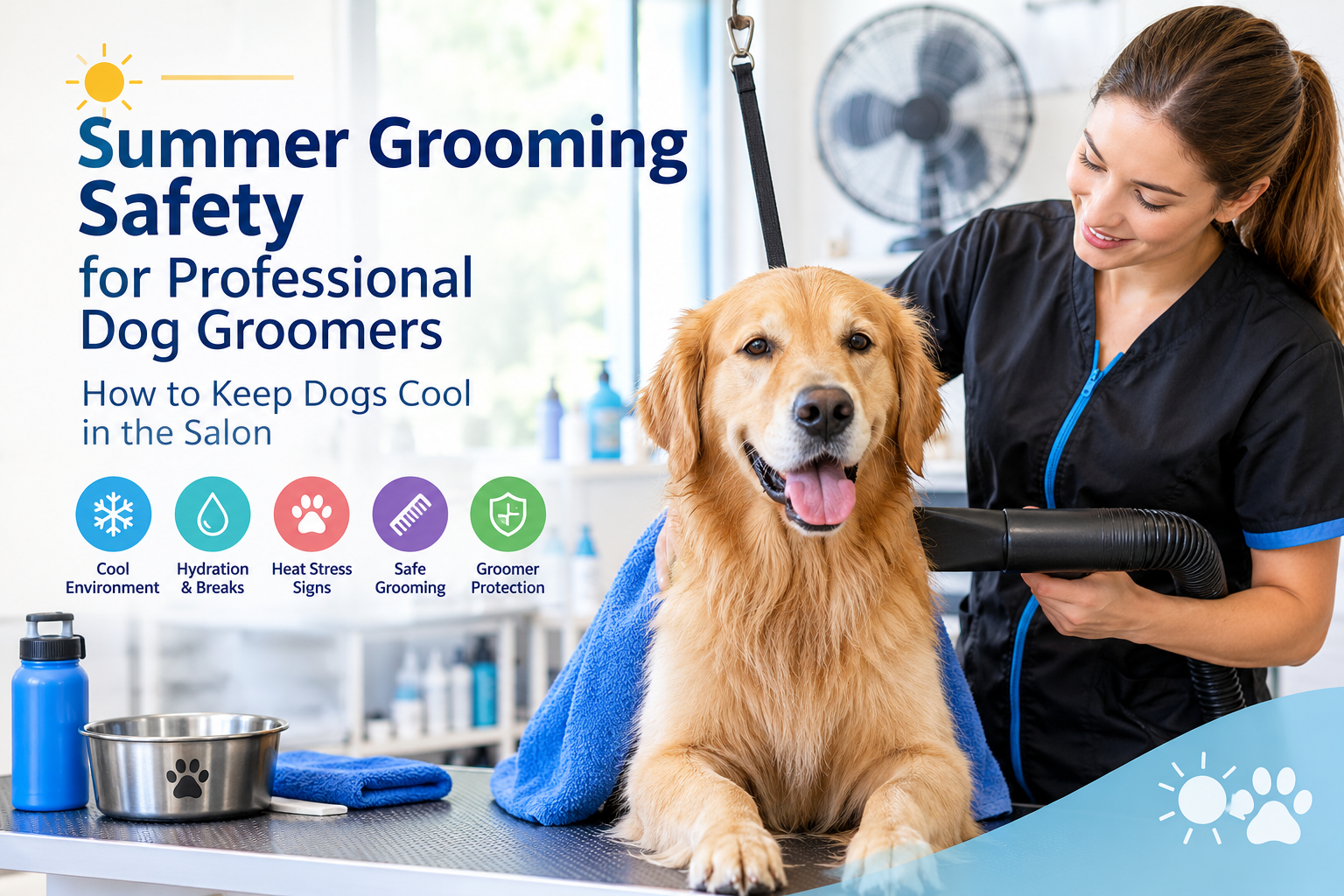
Summer can make professional dog grooming more challenging. A grooming appointment already involves bathing, brushing, clipping, drying, standing, movement, and sometimes stressful handling. Add high outdoor temperatures, humidity, a poorly ventilated space, or a long trip to the salon, and a dog can become uncomfortable much faster than expected.
For professional groomers, summer safety is therefore about more than giving a dog a shorter haircut. It means managing the entire grooming environment from arrival and pre-grooming assessment to bathing, drying, breaks, and departure.
Dogs primarily dissipate heat through panting and limited sweating through their paw pads, which makes overheating a serious concern in hot weather. Some dogs are particularly vulnerable, including brachycephalic breeds, puppies, senior dogs, overweight dogs, and dogs with certain underlying conditions.
At a Glance: Summer Grooming Safety Basics
The most important steps for keeping dogs comfortable during hot-weather grooming are straightforward:
- Schedule appointments around cooler parts of the day where practical.
- Keep the salon, grooming room, or mobile unit well ventilated and appropriately cooled.
- Provide access to fresh water and allow sensible rest periods.
- Never assume shaving a coat is the answer to summer heat.
- Monitor panting, gum color, coordination, energy level, and other signs of heat stress.
- Be especially cautious with brachycephalic, elderly, young, overweight, or medically vulnerable dogs.
- Stop grooming and seek veterinary care when heatstroke is suspected.
These measures are consistent with veterinary heat-safety guidance emphasizing environmental cooling, hydration, activity management, and rapid recognition of heatstroke.
Why Summer Grooming Requires Extra Attention
A dog may arrive at the salon already warm from the journey. If the trip involved a hot car, outdoor waiting, walking across hot pavement, or a poorly ventilated vehicle, the grooming session does not begin from a neutral starting point.
The grooming process itself can then add physical and emotional stress. Bathing, restraint, standing, brushing, clipping, and drying can all affect how comfortable a dog feels.
This is why professional groomers should think about summer safety as a process rather than a single grooming technique.
Before beginning, consider:
- How the dog arrived
- The outside temperature and humidity
- The dog’s age and physical condition
- Breed and coat type
- Whether the dog is already panting heavily
- Whether the dog appears anxious, weak, or unusually tired
- How much drying and coat work will be required
A short pre-grooming assessment can help a groomer identify situations where the normal appointment needs to be slowed down, modified, or postponed.
How to Keep Dogs Cool During Summer Grooming
1. Control the Grooming Environment
A cool grooming room is one of the most important parts of summer grooming safety.
Good airflow and a comfortable indoor environment reduce unnecessary heat exposure. In a salon, this can mean properly functioning air conditioning, fans that improve airflow, uncluttered work areas, and avoiding situations where multiple heat-generating appliances make the room uncomfortable.
For mobile groomers, environmental control can be more difficult. The grooming van or trailer should have reliable ventilation and cooling appropriate for the working conditions.
The goal is not simply to make the room feel comfortable for humans. The environment should also allow the dog to settle without accumulating excessive heat.
2. Schedule Appointments Strategically
Appointment timing can make summer grooming easier.
Where scheduling allows, consider placing grooming sessions during cooler parts of the day, especially for dogs that are sensitive to heat. Early appointments can also reduce the amount of time a dog spends traveling outdoors or waiting in a warm vehicle.
This is particularly useful for mobile grooming businesses, where the dog may be exposed to outdoor conditions immediately before the session.
Scheduling should still be based on the individual dog and local conditions rather than following one universal clock.
3. Hydration Should Be Part of the Routine
Fresh drinking water should be readily available to dogs that are able and willing to drink.
Hydration becomes especially relevant when temperatures are high or a dog has been active before arriving. Ryan’s Pet’s indexed summer article also emphasizes fresh water and even mentions adding ice cubes to keep drinking water cooler.
For a professional grooming operation, a simple summer hydration routine can include:
- Fresh water available when appropriate
- Clean bowls
- Water breaks during longer appointments
- Monitoring dogs that appear reluctant to drink
- Avoiding unnecessary delays for dogs showing signs of overheating
Water is supportive preventive care; it is not a substitute for veterinary treatment when heatstroke is suspected.
4. Understand the Difference Between Coat Maintenance and Shaving
One of the biggest summer grooming misconceptions is that every dog should receive a very short shave.
That is not universally appropriate.
A dog’s coat can provide insulation and protect the skin from environmental exposure. Double-coated breeds in particular have a dense undercoat and outer coat that serve different functions. Veterinary and grooming guidance generally emphasizes managing loose hair, mats, and coat condition rather than assuming that shaving is automatically the best way to keep a dog cool.
Professional groomers should assess:
- Coat type
- Undercoat density
- Matting
- Skin condition
- Breed characteristics
- Owner expectations
- Whether a veterinarian has recommended a specific coat treatment
Regular brushing can remove loose hair and help prevent mats, while maintaining a manageable coat.
5. Pay Special Attention to Double-Coated Dogs
Double-coated breeds require thoughtful coat management in warm weather.
Breeds such as Golden Retrievers, Huskies, German Shepherds, and Border Collies have coats that should not simply be treated like human hair that needs to be removed for summer.
The better approach is usually to focus on healthy coat maintenance, brushing, de-shedding where appropriate, mat prevention, skin inspection, and breed-appropriate trimming. The exact grooming approach should depend on the dog’s coat and condition.
A groomer should also remember that a severely matted coat is a different problem from a healthy, maintained double coat.
6. Make Bathing Safe in Hot Weather
Summer may increase the need for bathing because dogs spend more time outdoors, swimming, playing, or getting dirty.
Use products formulated for dogs rather than human shampoo, and avoid unnecessary over-bathing because excessive bathing can contribute to skin dryness or irritation. The American Kennel Club also recommends dog-specific shampoo and cool or lukewarm water rather than hot water.
After bathing, pay attention to:
- Complete but appropriate drying
- Ear moisture
- Paw condition
- Skin irritation
- Matting that becomes more obvious when wet
- The dog’s comfort throughout the process
The drying stage deserves particular attention because high-powered dryers can add noise, airflow, and environmental stress to an already stimulating appointment.
7. Be Careful With Drying and Heat-Producing Equipment
Drying is an essential part of professional grooming, but summer appointments require good judgment.
A grooming professional should avoid unnecessarily exposing a dog to excessive heat. Monitor the dog’s response rather than treating every drying session as identical.
Watch for:
- Increasing panting
- Restlessness
- Difficulty settling
- Excessive drooling
- Weakness
- Changes in gum color
- Loss of coordination
The presence of a dryer does not mean heatstroke is occurring, but a dog that is becoming progressively distressed should not simply be pushed through the appointment.
8. Know the Early Signs of Heat Stress
Recognizing heat stress early is one of the most valuable skills a professional groomer can develop.
Potential warning signs include heavy or rapid panting, excessive drooling, bright or abnormal gum color, weakness, vomiting, disorientation, difficulty walking, collapse, and other signs of serious distress.
The important distinction is that normal panting after activity is not the same as progressive heat illness.
A dog that cannot settle, continues to deteriorate, becomes weak, loses coordination, or collapses needs immediate attention.
9. Which Dogs Need Extra Summer Precautions?
Not every dog handles heat in the same way.
Extra caution is warranted with:
Brachycephalic Dogs
Dogs with short or flat facial structures can have more difficulty dissipating heat efficiently and may be at increased risk of heat-related illness.
Puppies and Senior Dogs
Young and older dogs may need closer monitoring during hot conditions.
Overweight Dogs
Excess body weight is another recognized heatstroke risk factor.
Dogs With Existing Medical Problems
Dogs with certain heart, respiratory, endocrine, or other medical conditions can require additional caution. The groomer should follow information provided by the owner and veterinarian and avoid assuming that every dog can tolerate the same grooming routine.
10. Check the Dog Before It Leaves the Salon
Summer safety should not stop when the haircut is finished.
Before sending a dog home, assess whether it appears comfortable and settled. Make sure it is not showing continuing signs of overheating or distress.
This becomes particularly important when temperatures outside remain high.
A dog that leaves the salon into extreme heat still faces risk during transportation, especially when traveling in a vehicle or being exposed to hot outdoor surfaces.
What Should a Groomer Do if a Dog Shows Signs of Heatstroke?
Heatstroke is a medical emergency.
Veterinary guidance recommends moving the dog away from the heat and beginning controlled cooling while arranging urgent veterinary care. Cool water and airflow can be used, while cold-water immersion should be avoided.
A practical emergency response includes:
Stop grooming immediately.
Move the dog to a cooler, well-ventilated or air-conditioned area.
Contact a veterinarian or emergency veterinary service.
Begin appropriate cooling with cool, not extremely cold, water while arranging veterinary treatment.
Keep monitoring the dog during transport.
Do not assume that improvement means the danger has completely passed. Heatstroke can cause internal damage that may not be obvious immediately.
Professional groomers should have an established emergency plan and know which veterinary clinic or emergency hospital their business can contact.
Hot Pavement Is Also a Grooming-Day Problem
The summer environment starts before the dog reaches the grooming table.
Hot asphalt and pavement can injure paw pads. Scheduling walks during cooler times and choosing grass or shaded routes can reduce exposure to hot surfaces.
A useful grooming-business habit is to ask owners about how the dog traveled to the appointment, especially during extreme weather.
For mobile groomers, the same principle applies between appointments. A professional may be comfortable outdoors while the dog is not.
Summer Grooming Safety for Mobile Groomers
Mobile grooming creates a unique combination of benefits and risks.
There may be less time spent waiting in a busy salon, but the vehicle itself becomes part of the thermal environment.
Mobile groomers should pay attention to:
- Cabin ventilation
- Cooling performance
- Sun exposure
- Airflow
- Temperature changes between appointments
- Time spent parked
- Safe loading and unloading
- Vehicle conditions during extremely hot weather
A grooming van that is comfortable in one part of the day may become much hotter later, so conditions should be monitored rather than assumed.
What Should Professional Groomers Wear in Summer?
Summer safety is also relevant to the professional doing the grooming.
Groomers work around water, loose hair, shampoo, dryers, frequent movement, and long appointments. Clothing that is lightweight, breathable, easy to clean, and suitable for professional grooming can make daily work more manageable.
Groomer Outfitters current apparel range includes grooming smock and jackets designed around hair resistance, lightweight comfort, water resistance, mobility, and professional salon use. Its manufacturing service also supports lightweight fabric choices and customized grooming apparel for salons and brands.
The important point is that groomer apparel supports the professional’s working environment; it does not cool the dog or replace proper salon temperature control.
For summer-heavy grooming schedules, short-sleeve or lightweight grooming garments can be considered where they provide the protection the work requires.
Summer Grooming Safety Checklist for Grooming Salons
Before opening:
Check cooling and ventilation.
Keep drinking water and clean bowls available.
Make sure grooming equipment is functioning correctly.
Review the day’s appointments for dogs that may require additional heat precautions.
During each appointment:
Observe the dog before grooming starts.
Monitor panting and behavior.
Provide sensible breaks.
Avoid unnecessary heat exposure during drying.
Adjust the grooming routine based on the individual dog.
Stop when the dog’s condition indicates that continuing is unsafe.
After grooming:
Check that the dog is settled before departure.
Give owners practical transport advice during extreme heat.
Document unusual heat-related incidents in your salon records.
Common Summer Grooming Mistakes to Avoid
Shaving Every Dog
Coat type matters, and shaving is not a universal summer solution.
Ignoring Heavy Panting
Panting can be normal, but persistent or worsening panting together with drooling, weakness, abnormal gums, vomiting, confusion, or collapse should never be ignored.
Treating Every Dog the Same
A healthy young Labrador and a brachycephalic senior dog may require very different levels of caution in hot weather.
Focusing Only on the Haircut
Heat safety includes transportation, salon conditions, bathing, drying, rest periods, hydration, and post-grooming travel.
Assuming Grooming Apparel Solves Heat Problems
Clothing can improve the groomer’s working comfort, but the dog’s thermal safety depends on appropriate environmental management and monitoring.
Final Thoughts
Summer grooming safety is not about one haircut, one cooling product, or one piece of equipment. It is about managing the whole grooming experience.
Professional groomers can reduce avoidable heat exposure by controlling the salon environment, planning appointments carefully, maintaining healthy coats, using appropriate bathing and drying practices, providing sensible hydration opportunities, and recognizing heat-stress warning signs early.
Most importantly, groomers should understand when a normal grooming appointment needs to stop. Heatstroke can progress quickly and requires veterinary attention, so a clear emergency protocol should be part of every professional grooming operation.
Frequently Asked Questions
How do you keep a dog cool while grooming?
Keep the grooming environment appropriately cool and ventilated, provide access to water when appropriate, avoid unnecessary heat exposure, schedule demanding appointments thoughtfully, and monitor the dog throughout bathing, clipping, and drying.
Can dogs overheat during grooming?
Yes. Heat-related illness can occur when environmental heat, exertion, stress, or poor ventilation exceed a dog’s ability to dissipate heat. Some dogs are more vulnerable than others.
Should you shave a dog for summer?
Not automatically. Coat type, breed, skin condition, and grooming needs should be considered. Many double-coated dogs should not simply be shaved down because the coat also provides insulation and skin protection.
What are the signs of heat stress in dogs?
Warning signs can include heavy panting, excessive drooling, abnormal gum color, weakness, vomiting, confusion, poor coordination, collapse, and other signs of distress. Heatstroke requires urgent veterinary attention.
What should you do if a dog overheats during grooming?
Stop grooming, move the dog to a cooler environment, begin appropriate cooling with cool water and airflow, and contact a veterinarian or emergency veterinary service immediately. Do not use cold-water immersion.
Is special grooming clothing useful in summer?
Lightweight, breathable grooming clothing can improve the groomer’s comfort during long, physically active appointments. It should be considered part of professional workwear rather than a treatment or cooling method for the dog. Groomer Outfitters offers lightweight grooming apparel designed for professional grooming environments.